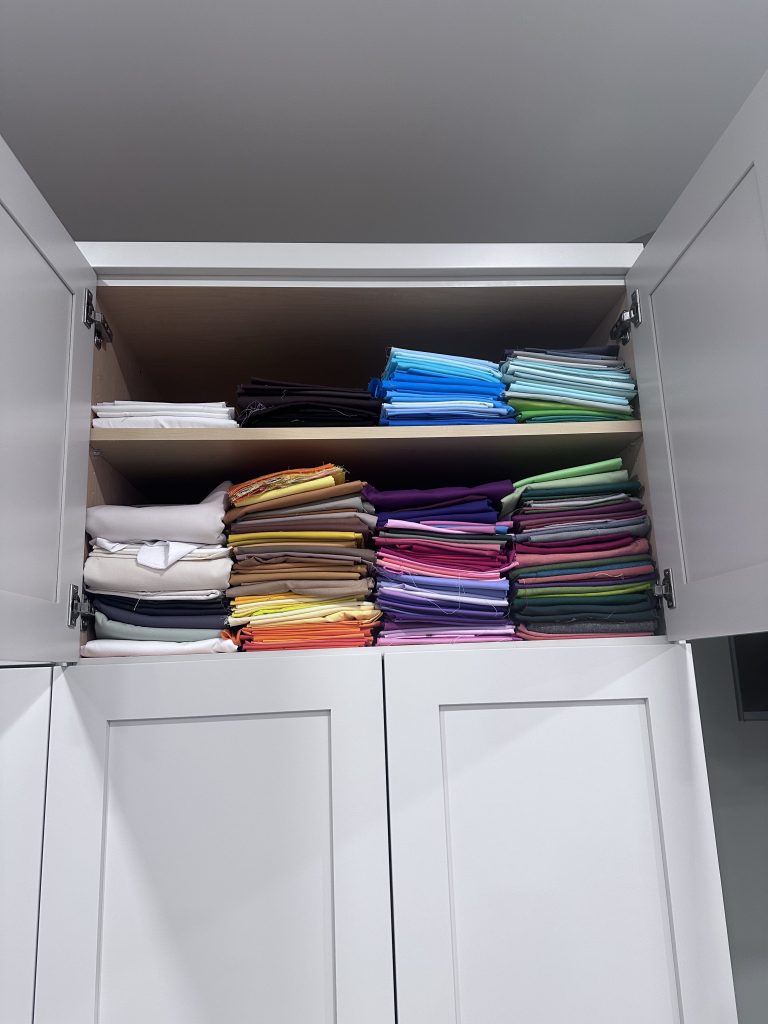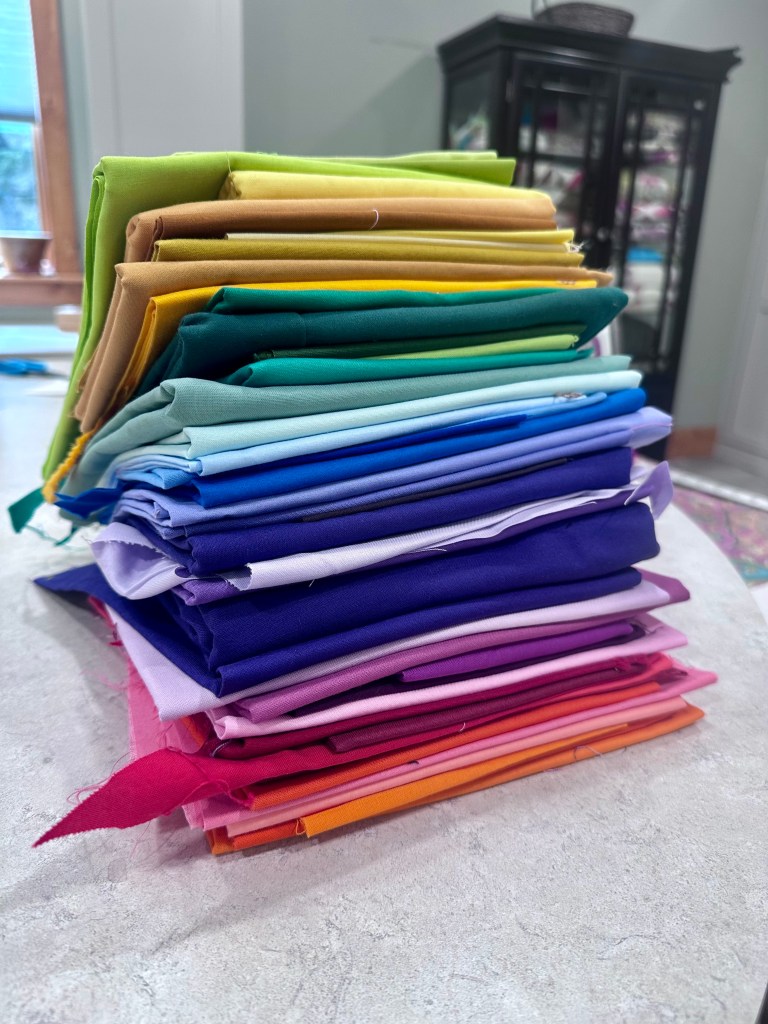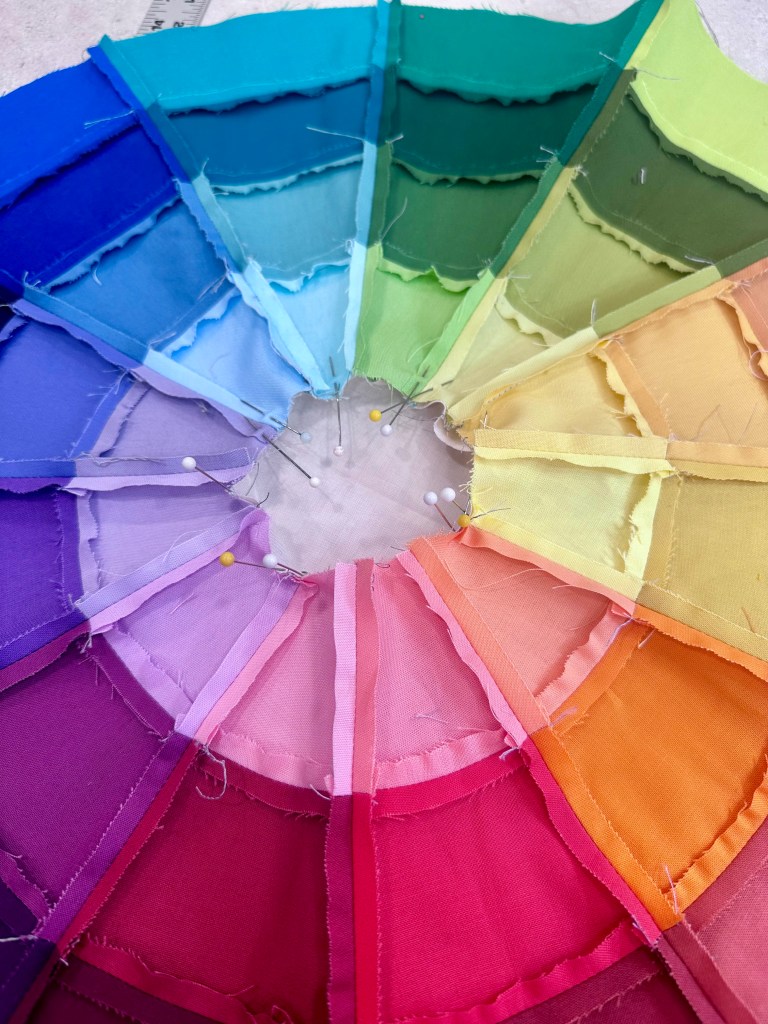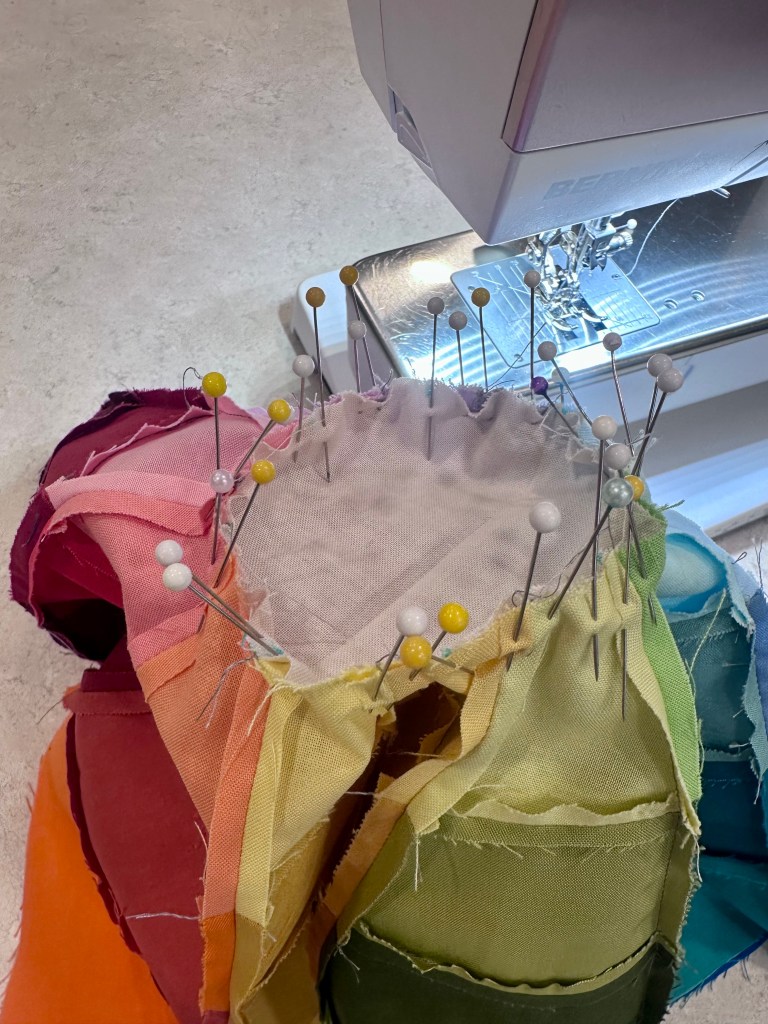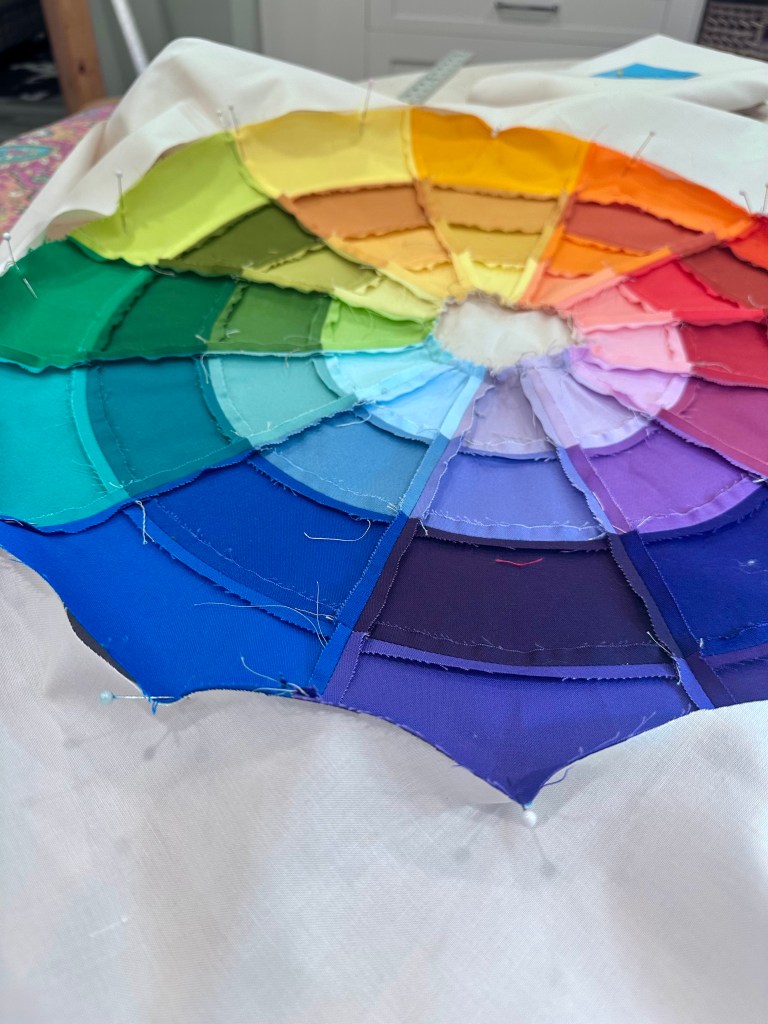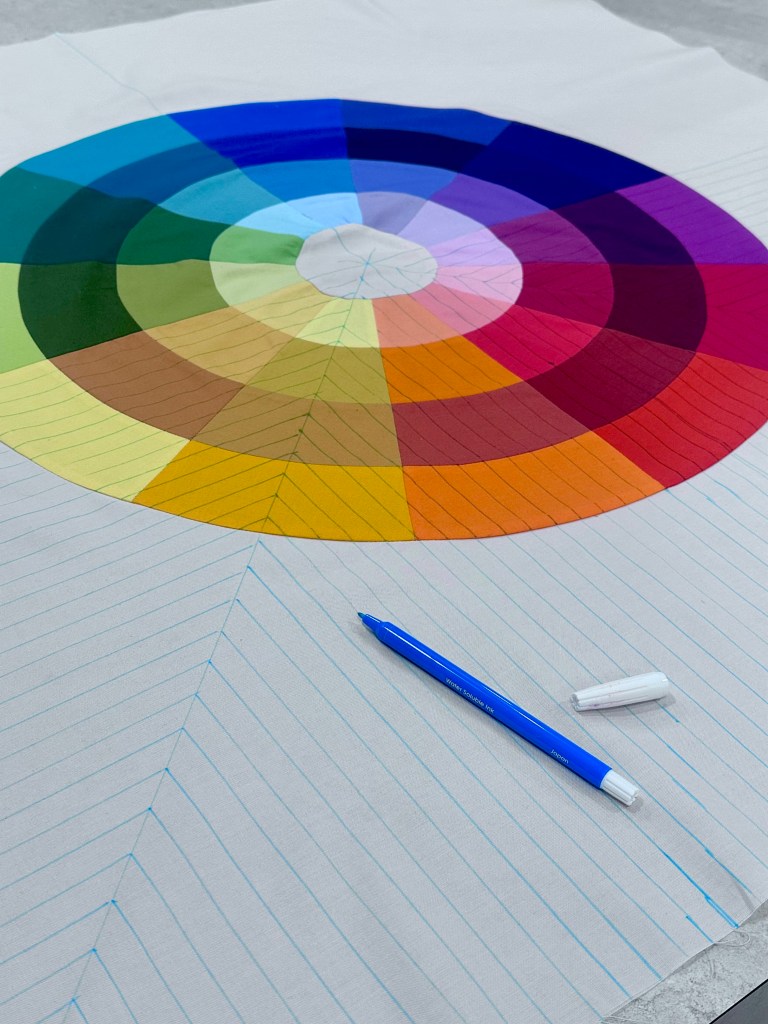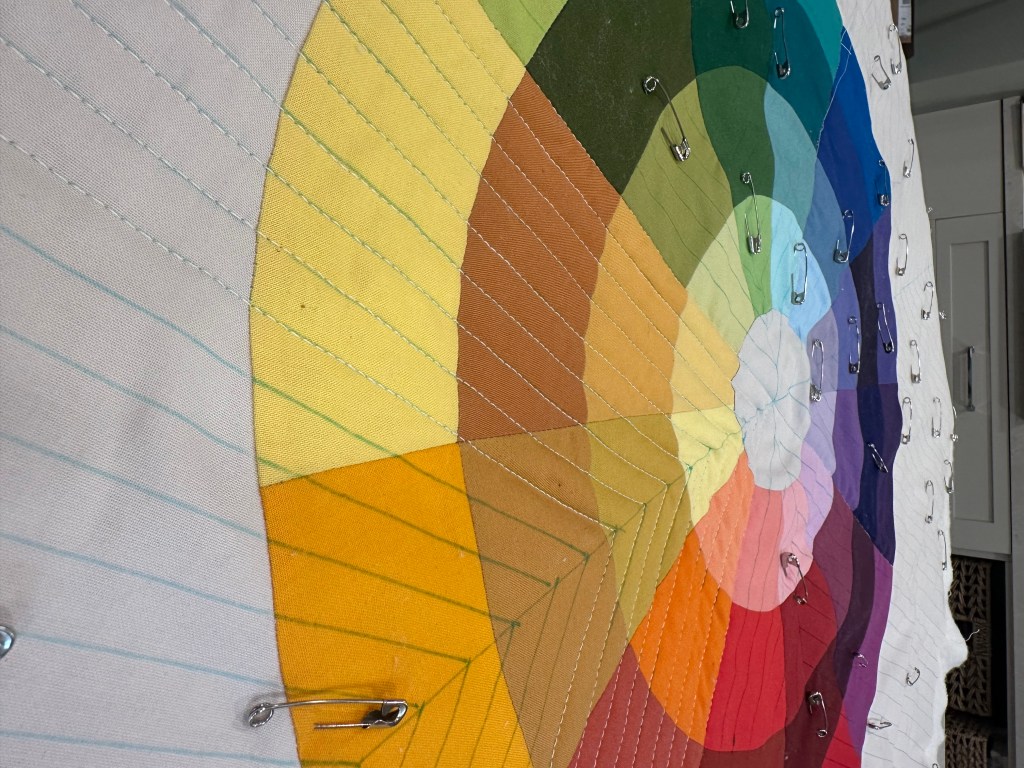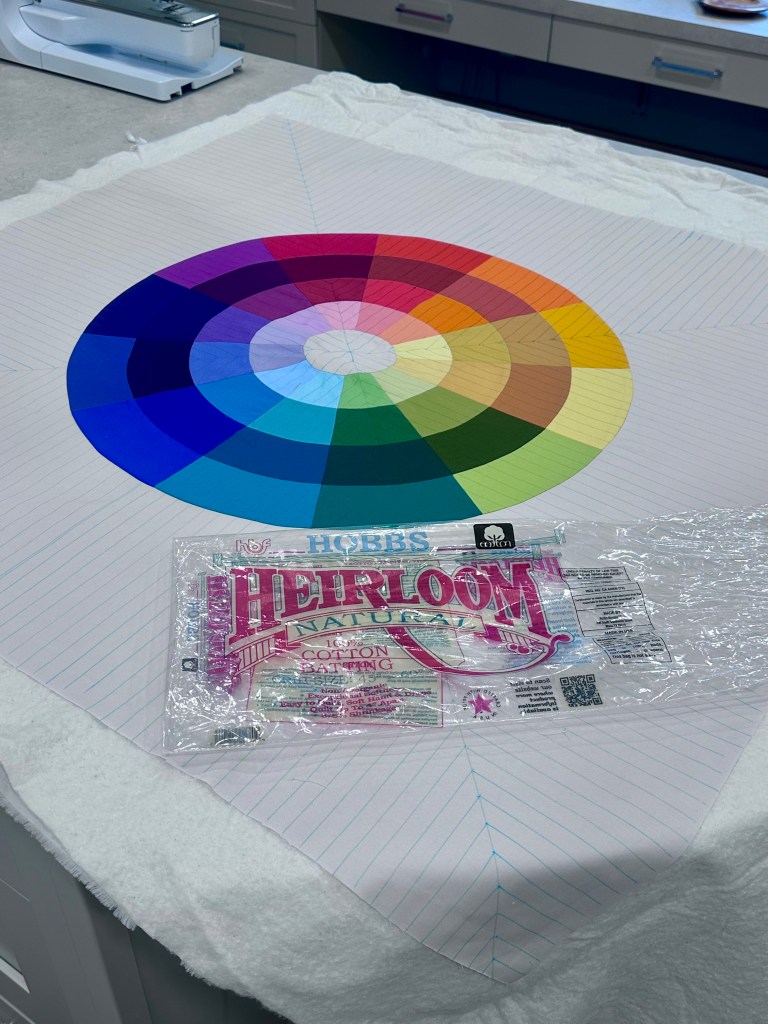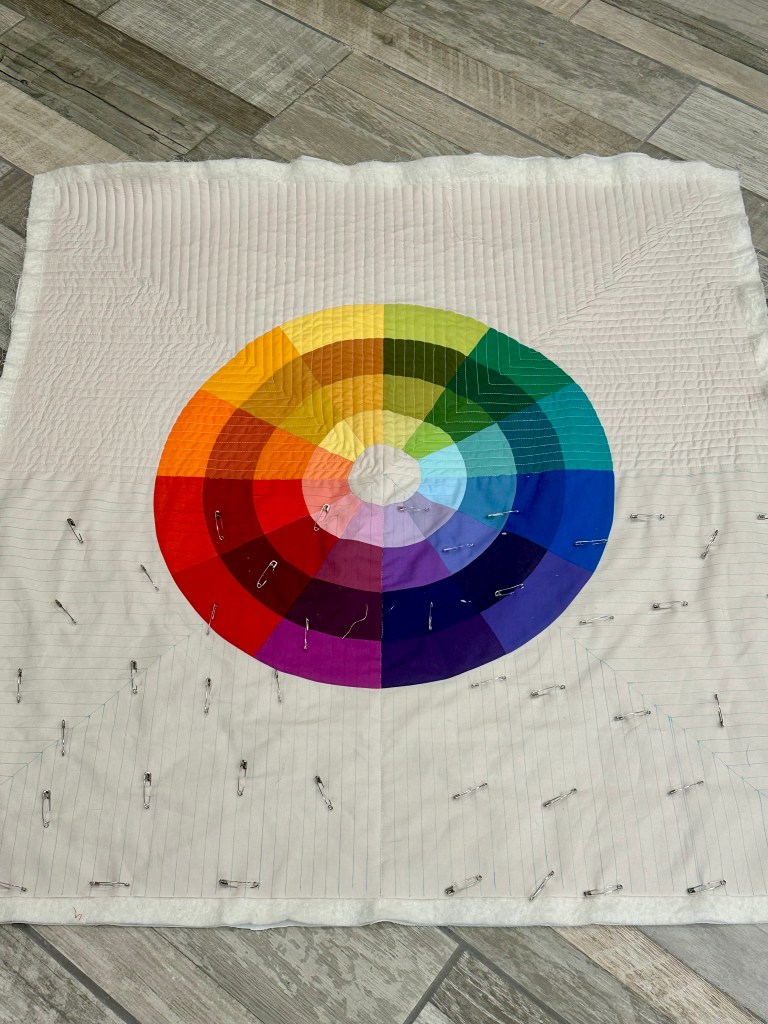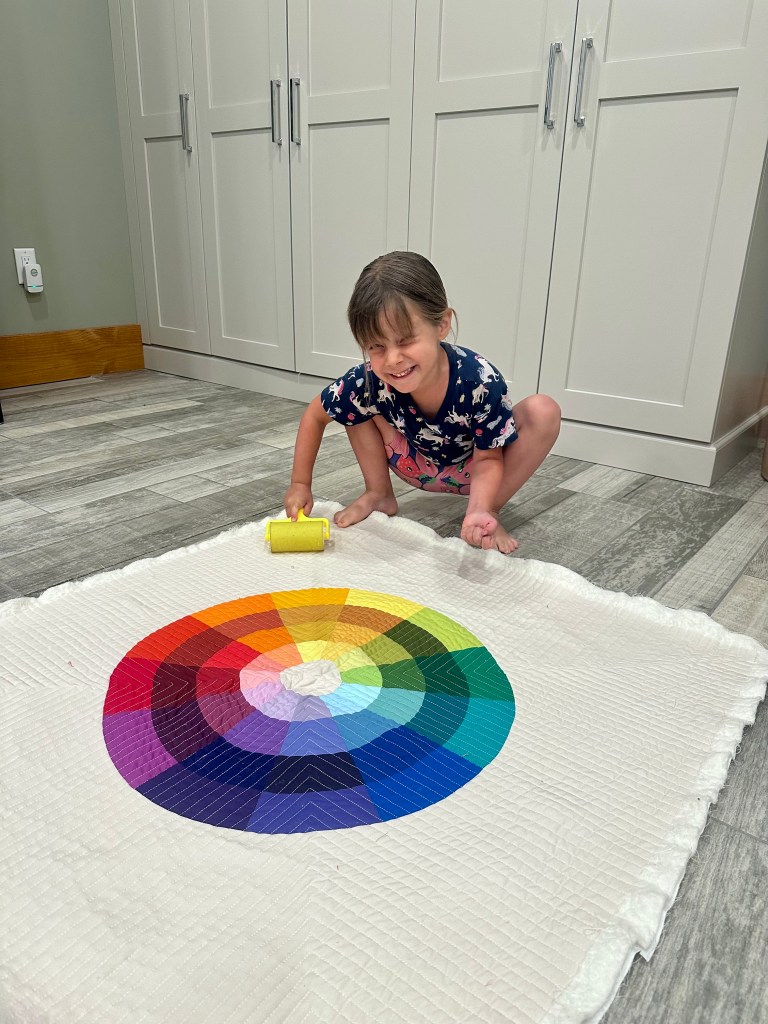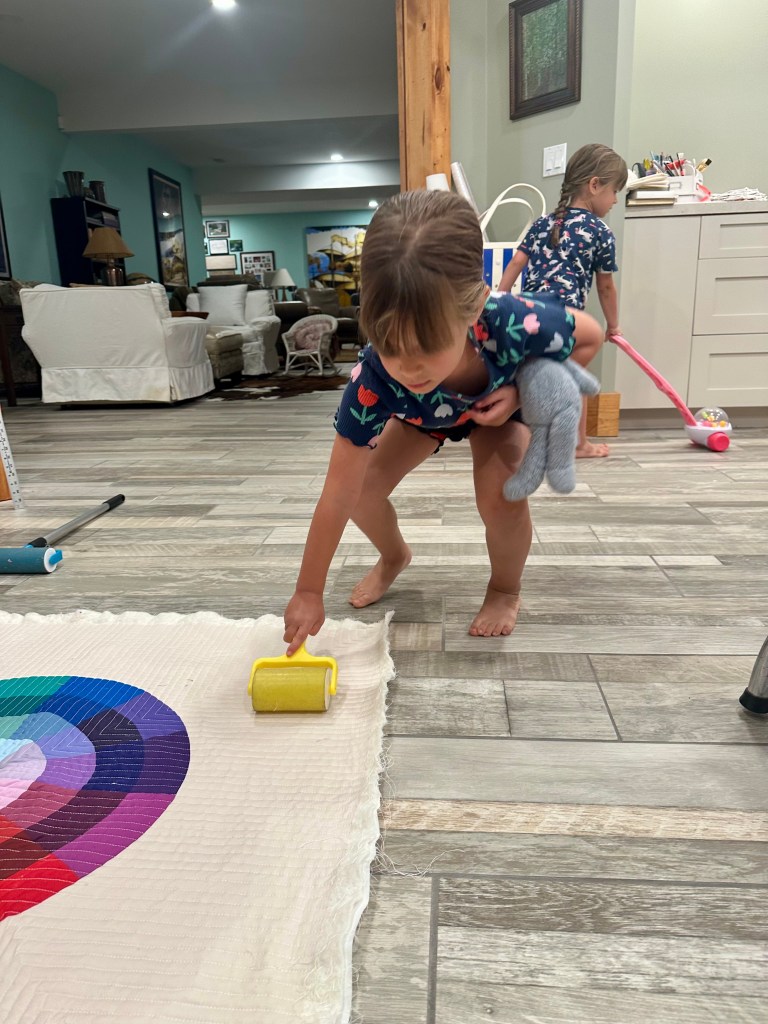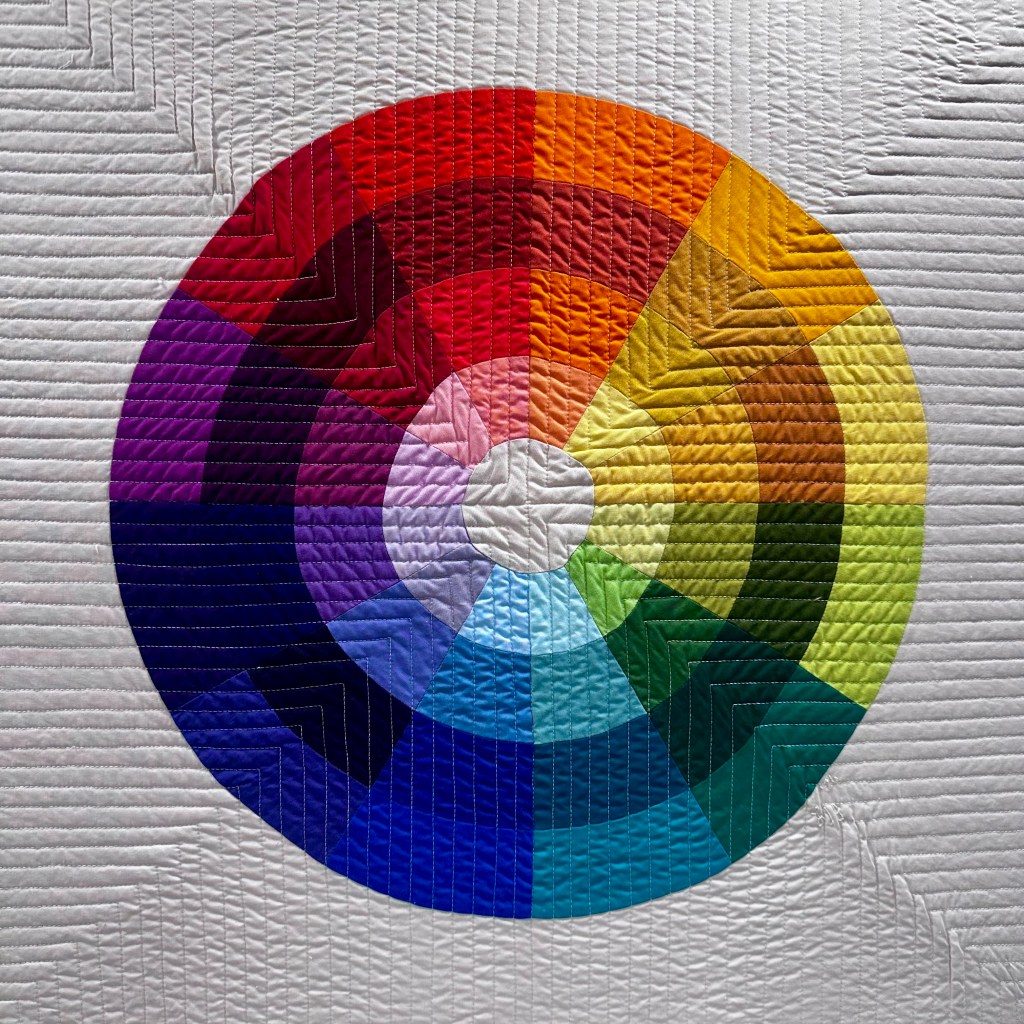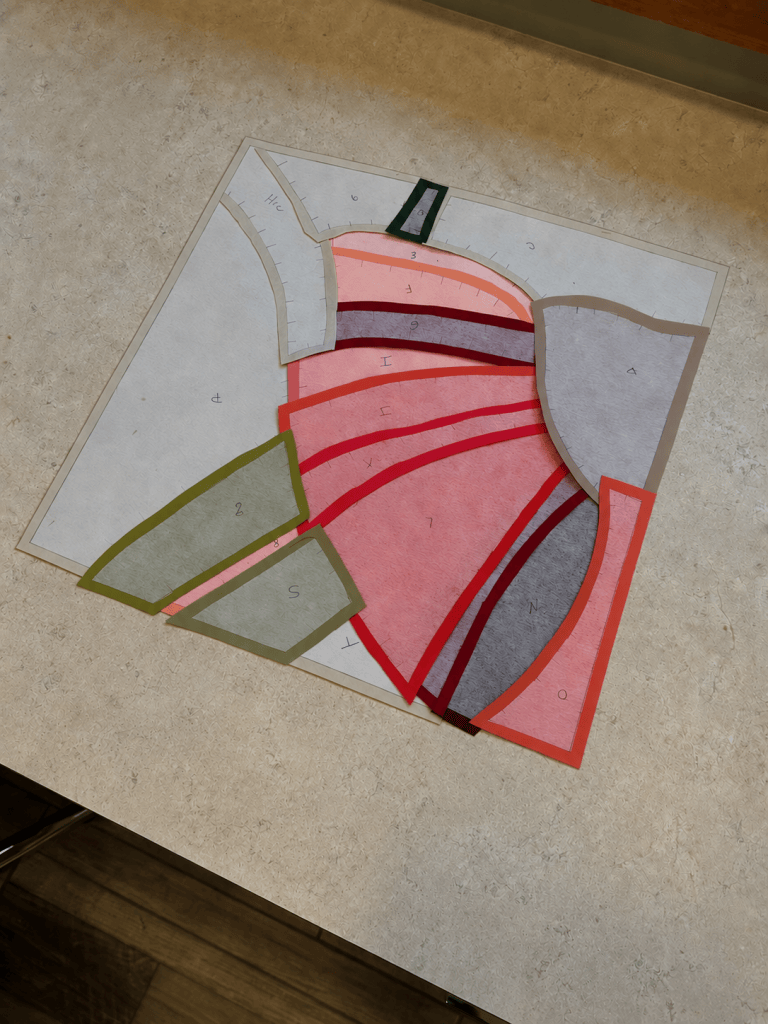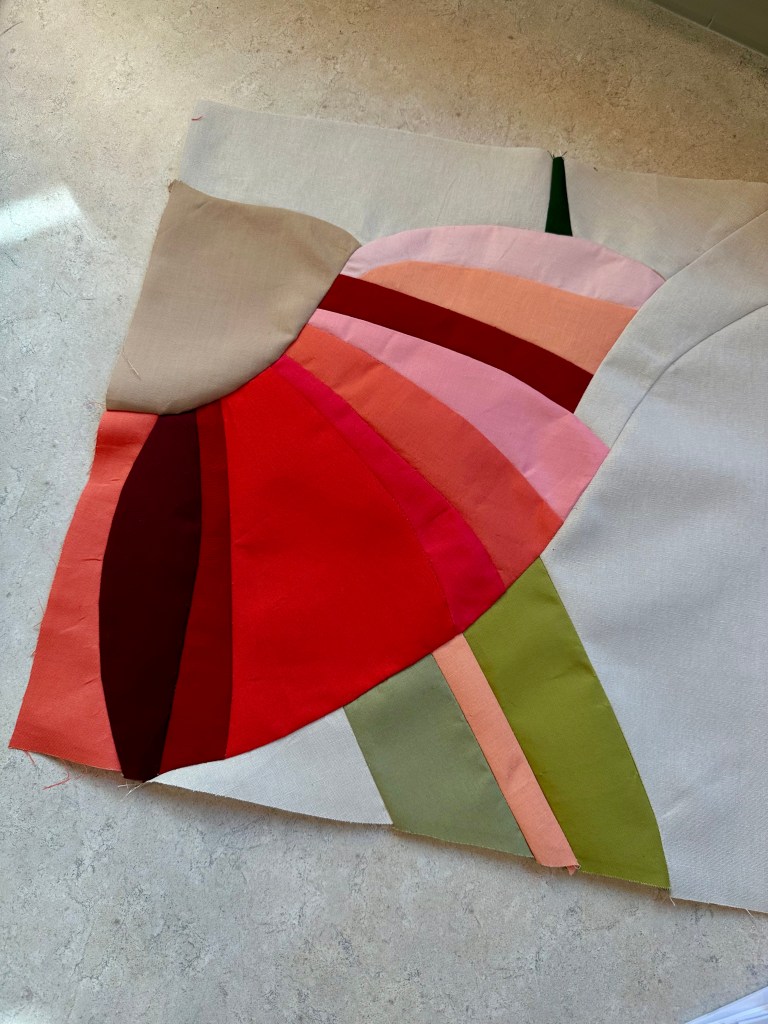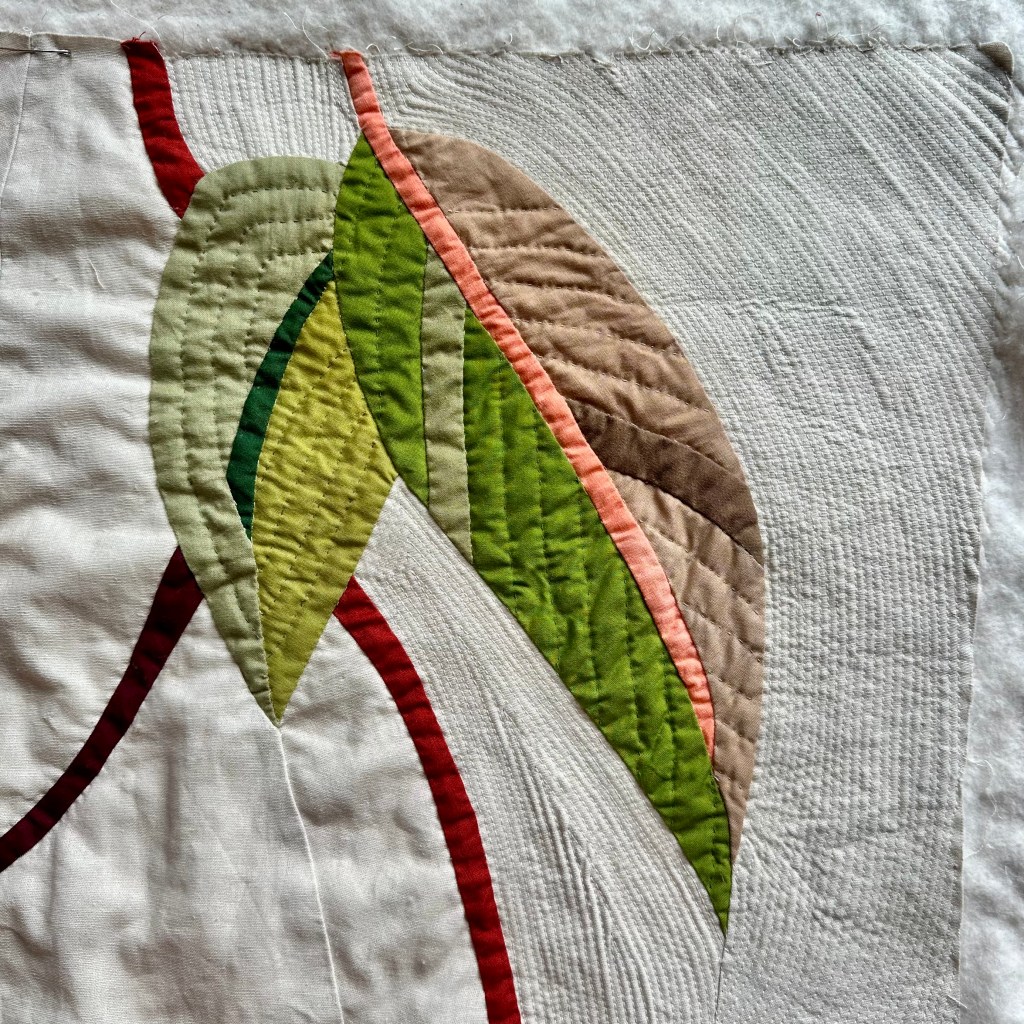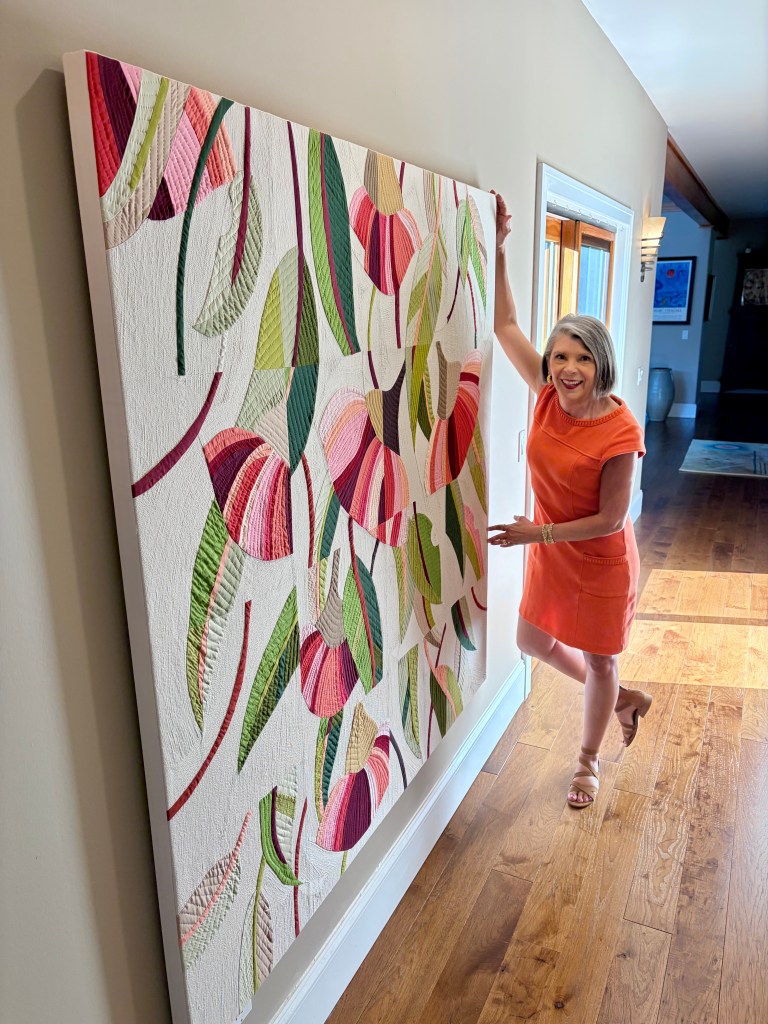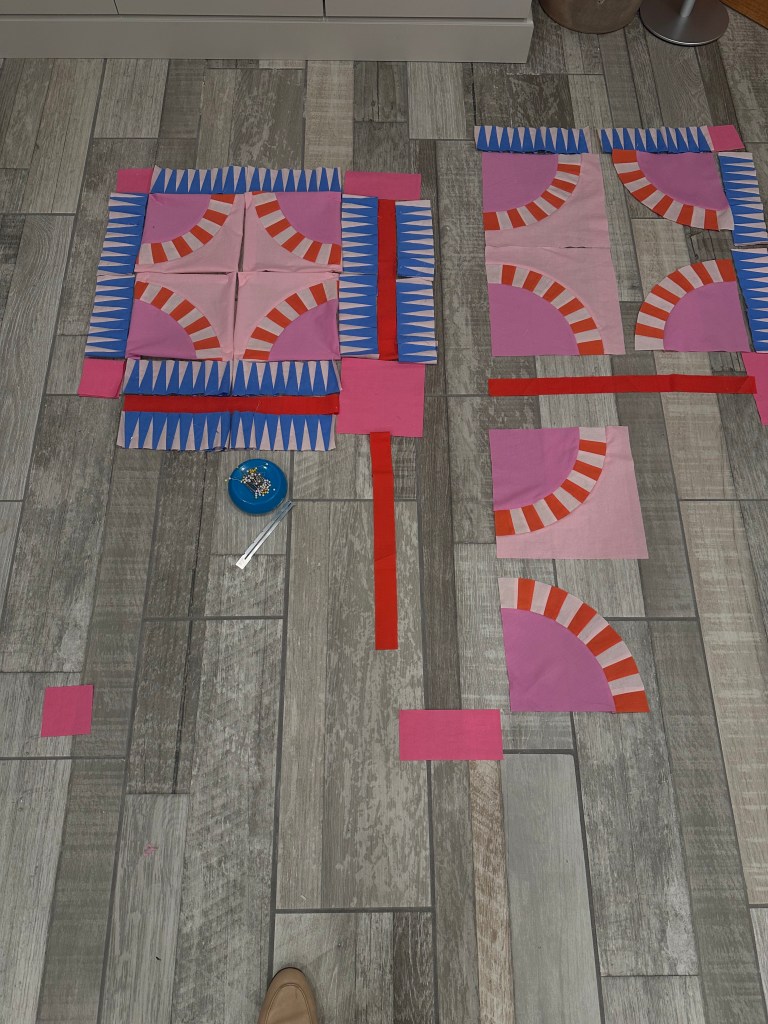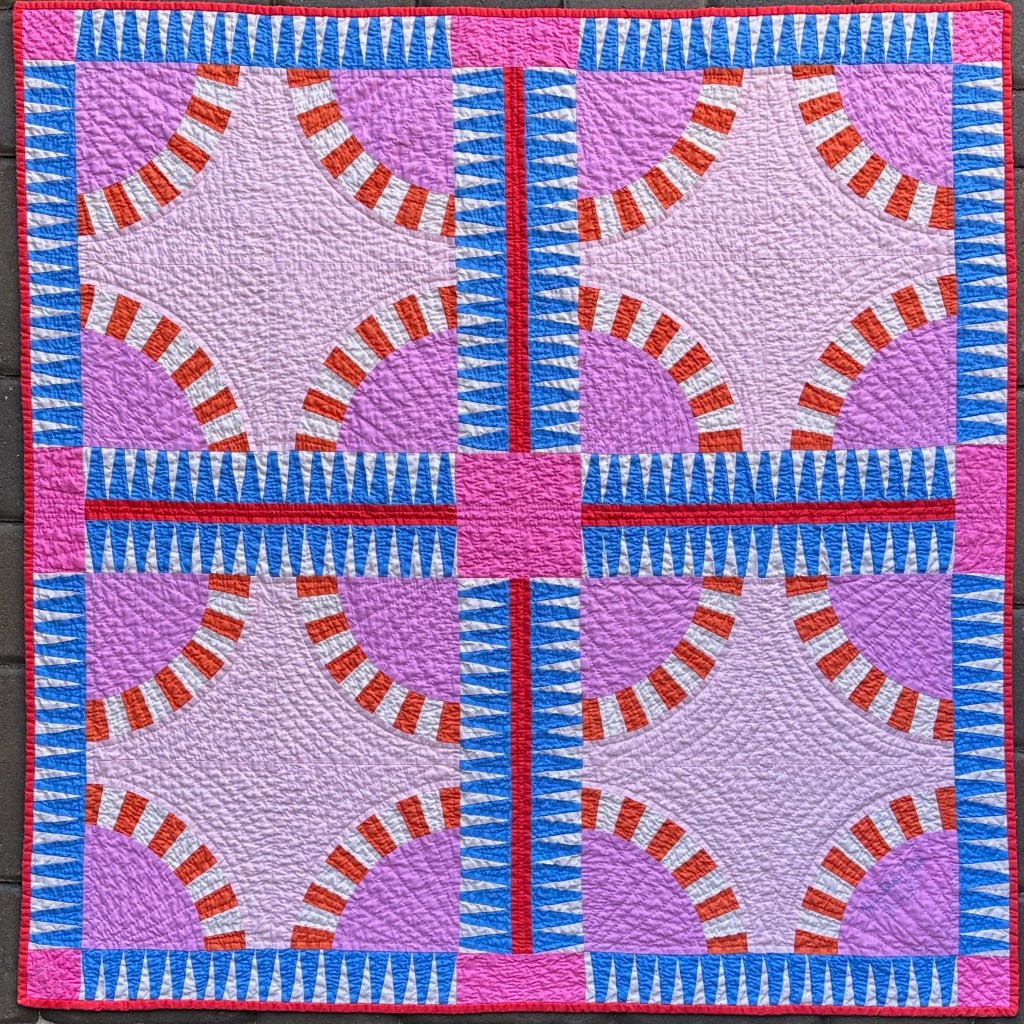
One of the most ambitious art quilts I’ve ever created.
From the first pieces of fabric to the final stitches, this textile wall hanging became a much bigger undertaking than I ever imagined. So many decisions, so many hours, so many stitches-and more than a few moments of wondering whether the idea in my head would become the piece I envisioned.
It did.
And now it hangs in our home.
Ready to start!
Love this technique.
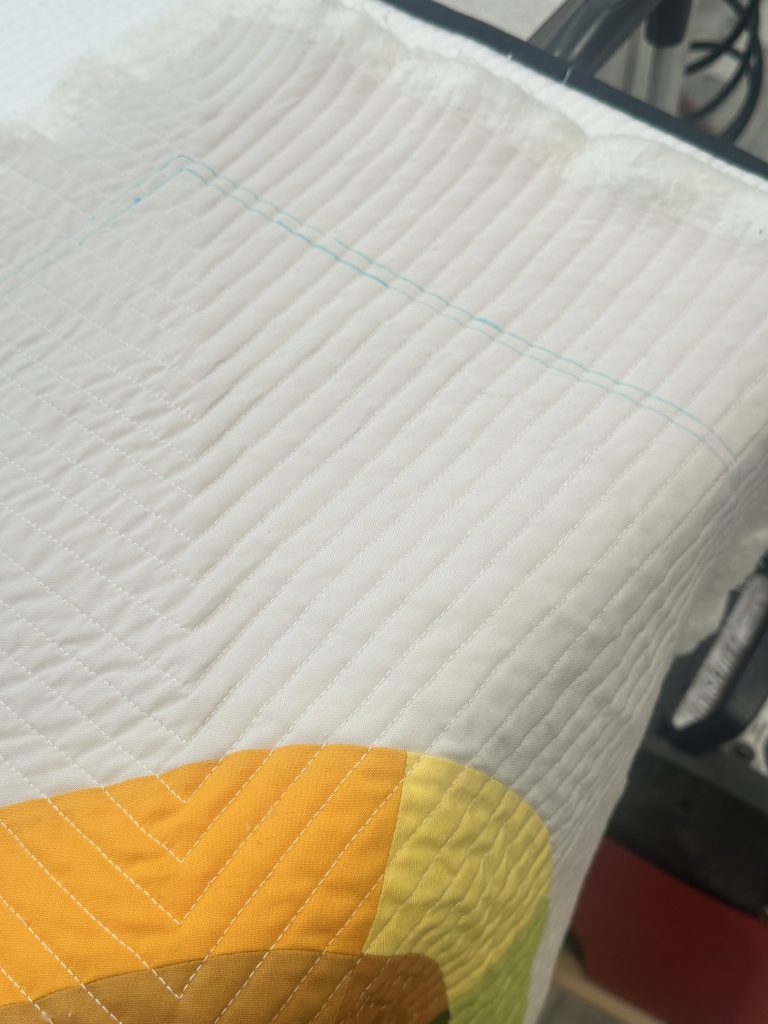
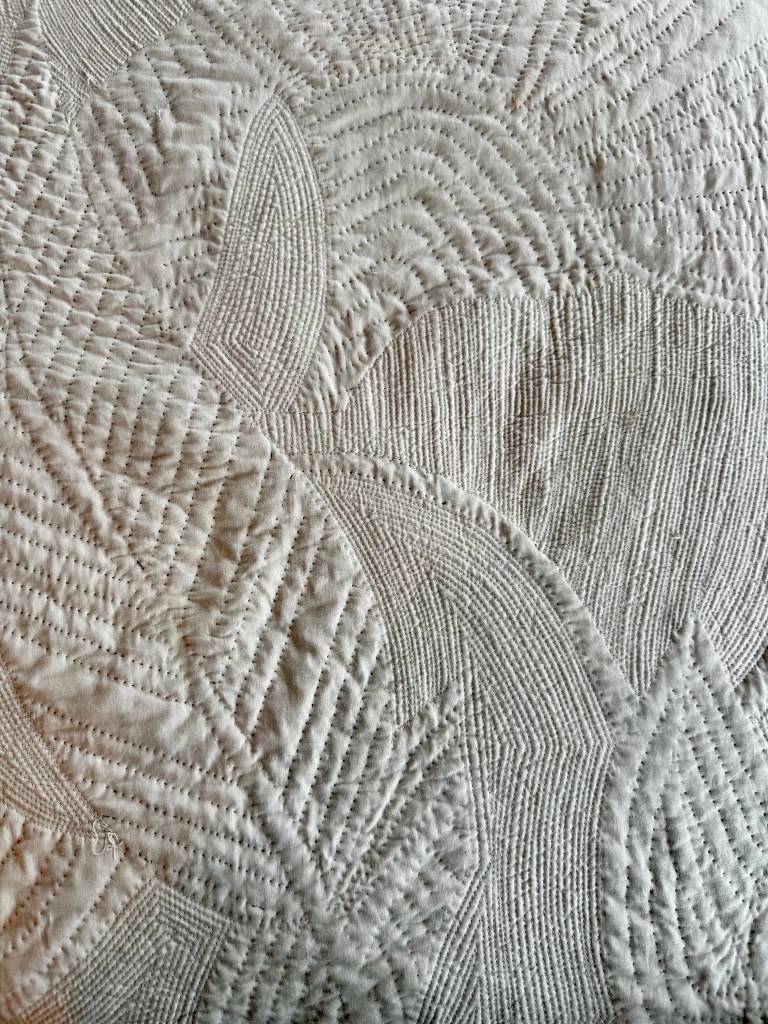
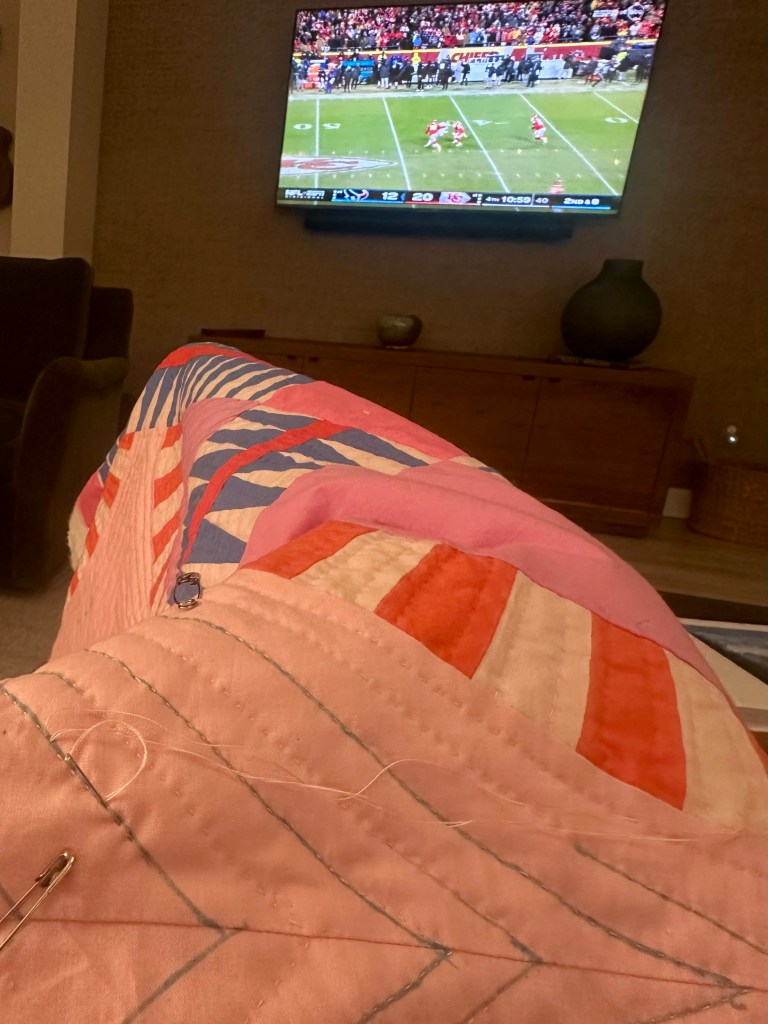
Background quilting has begun.
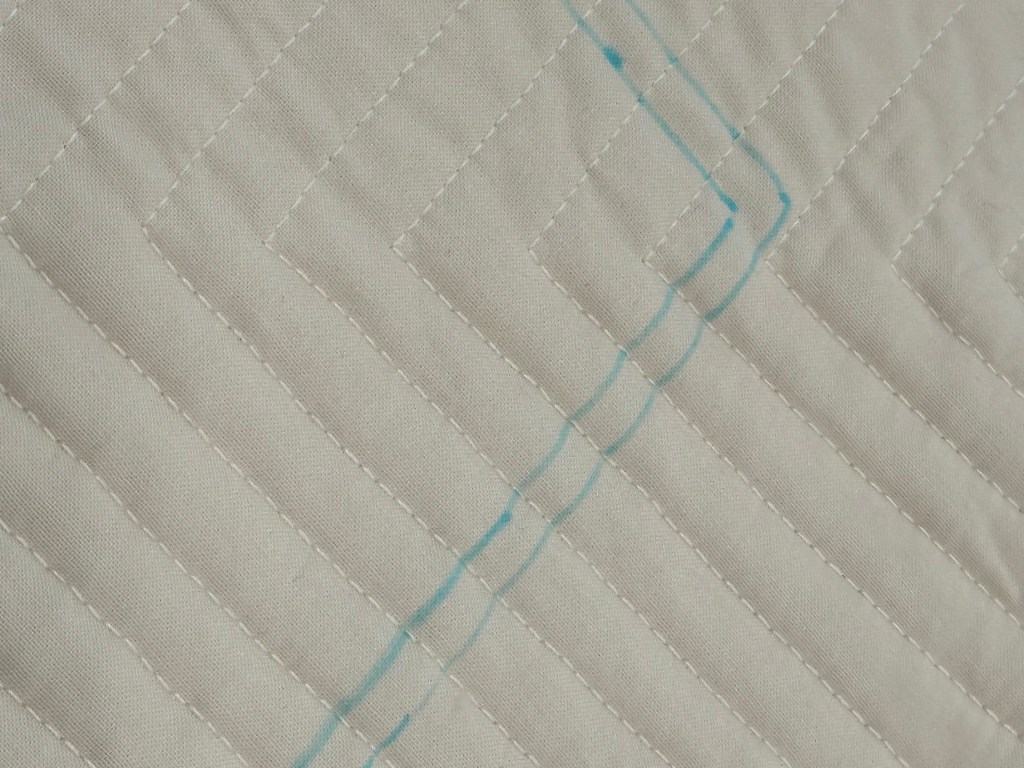
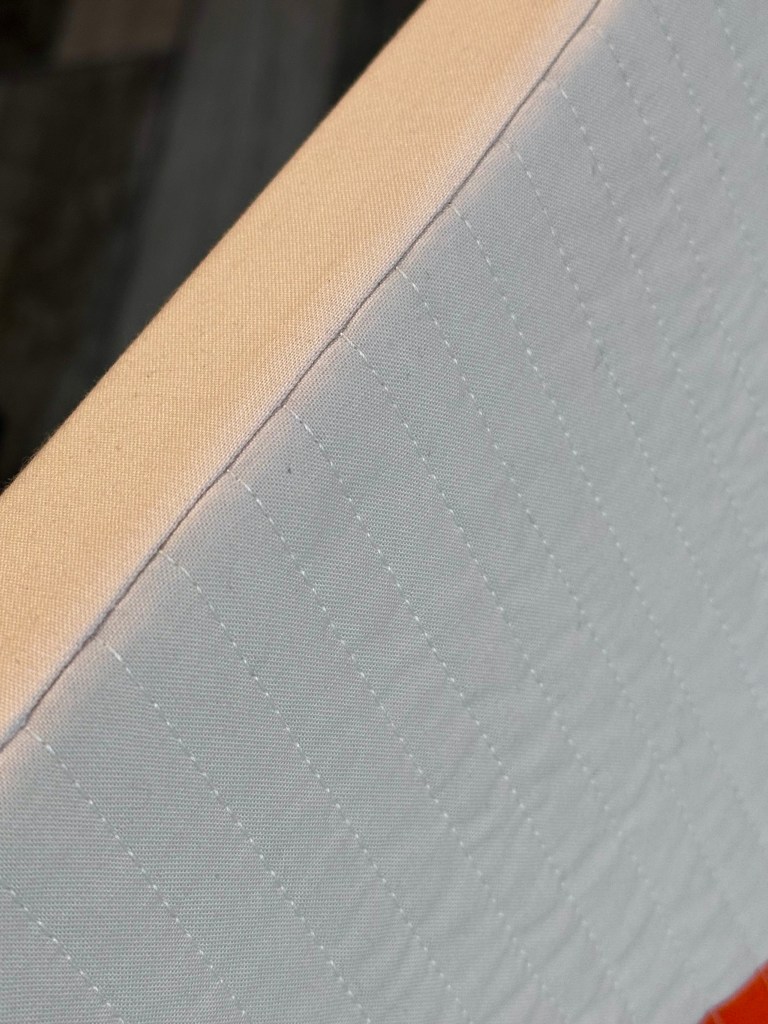
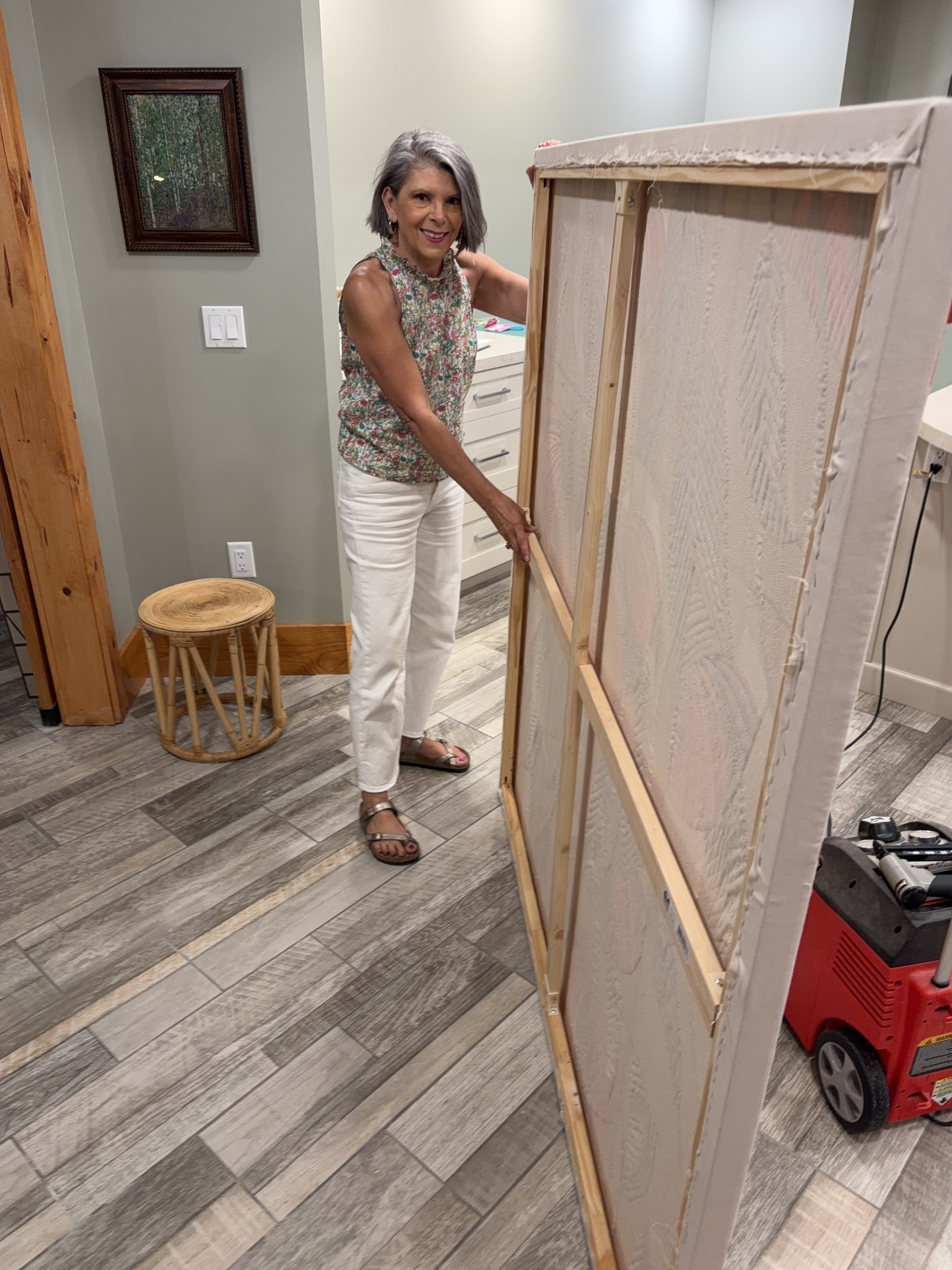
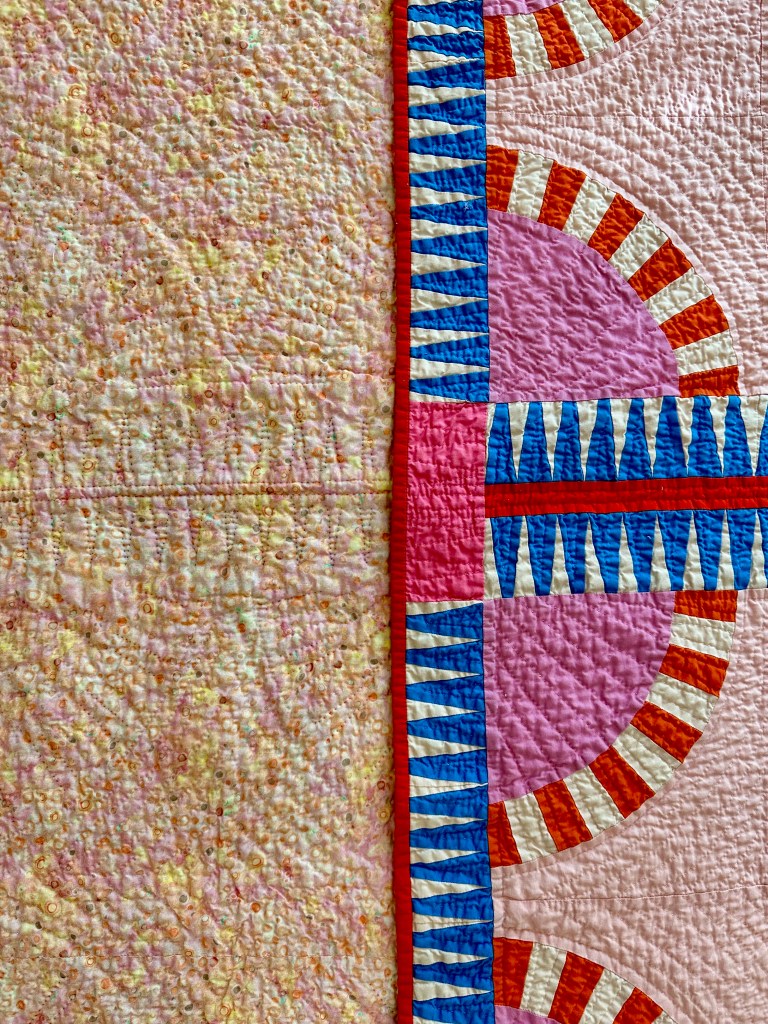
I love how the texture shows up on the back! Makes me want to do an all white quilt!
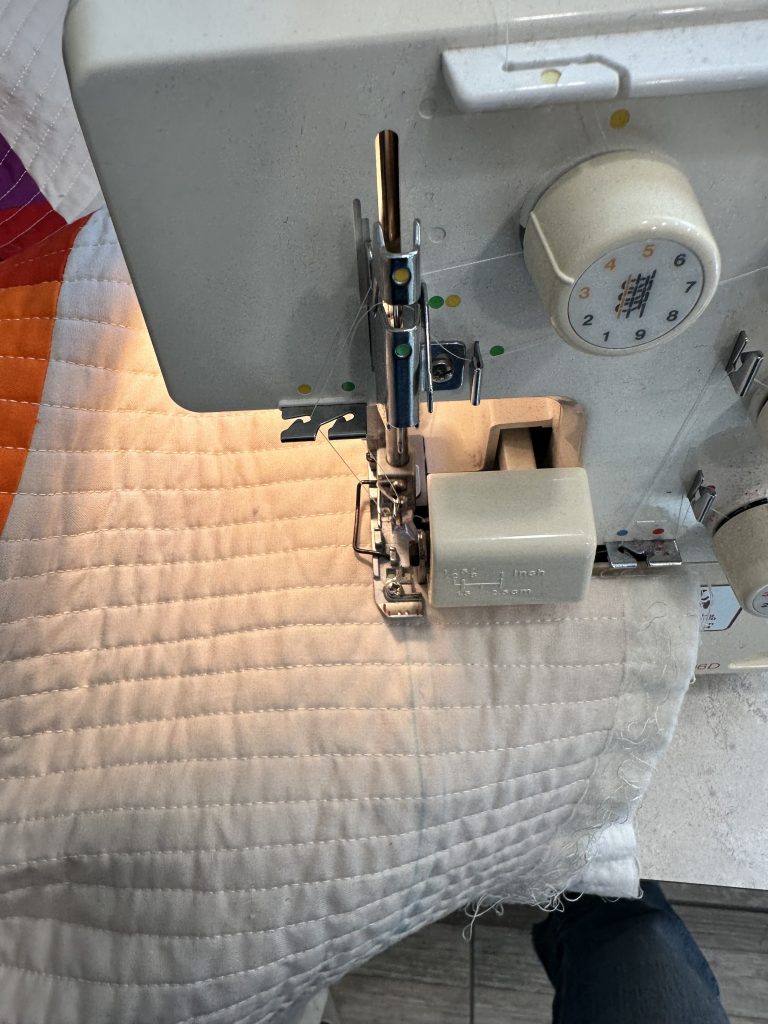
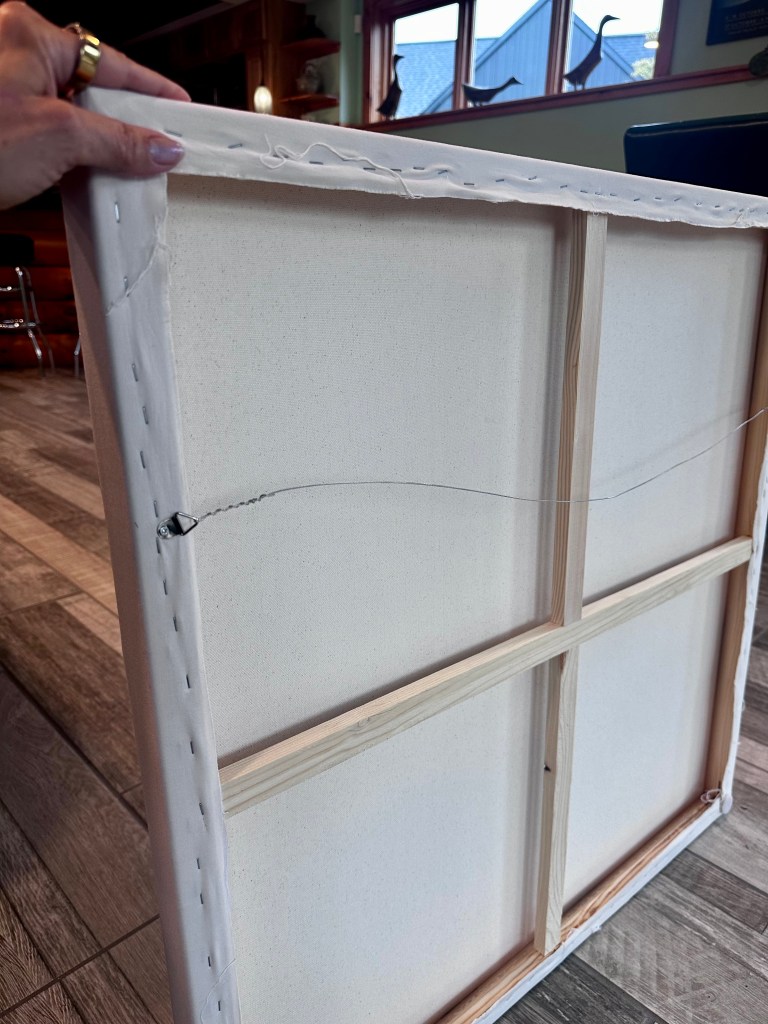
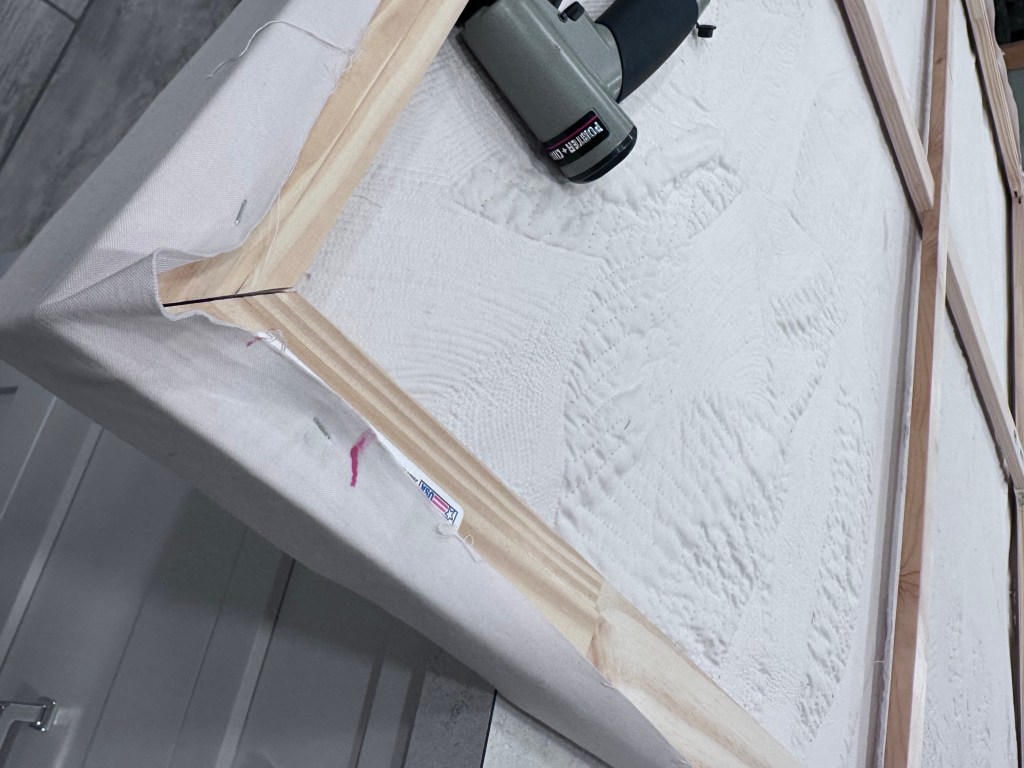
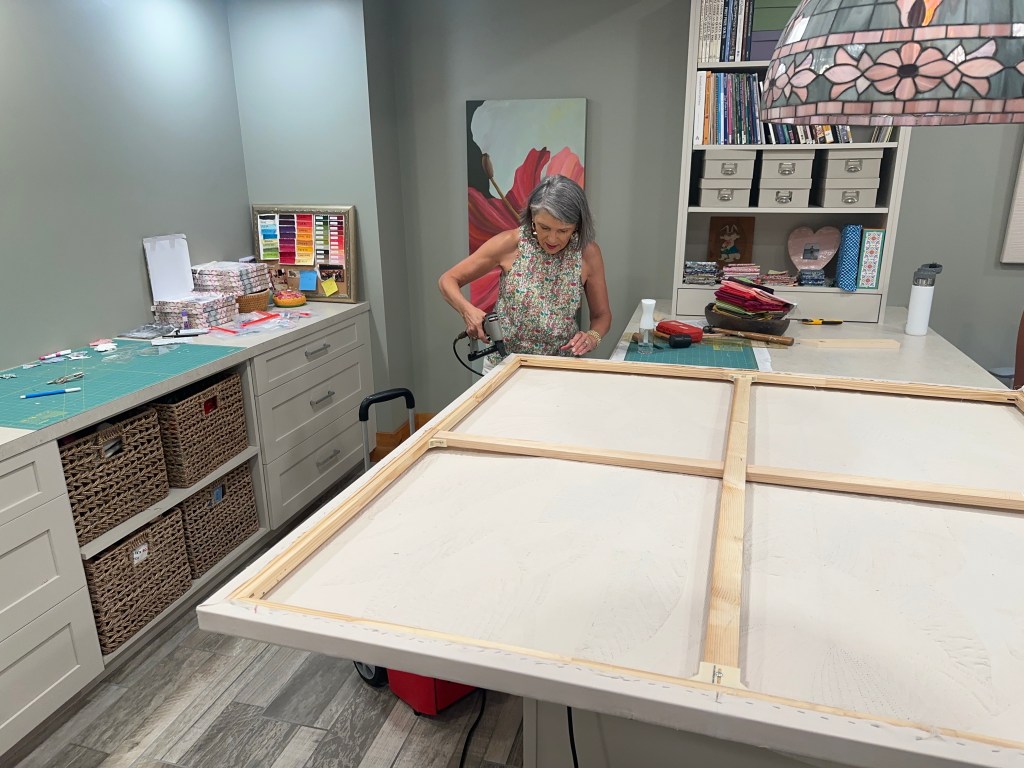
Using a compressor makes stapling the binding to the frame much easier!
I can’t believe, after two years, it is finally finished!
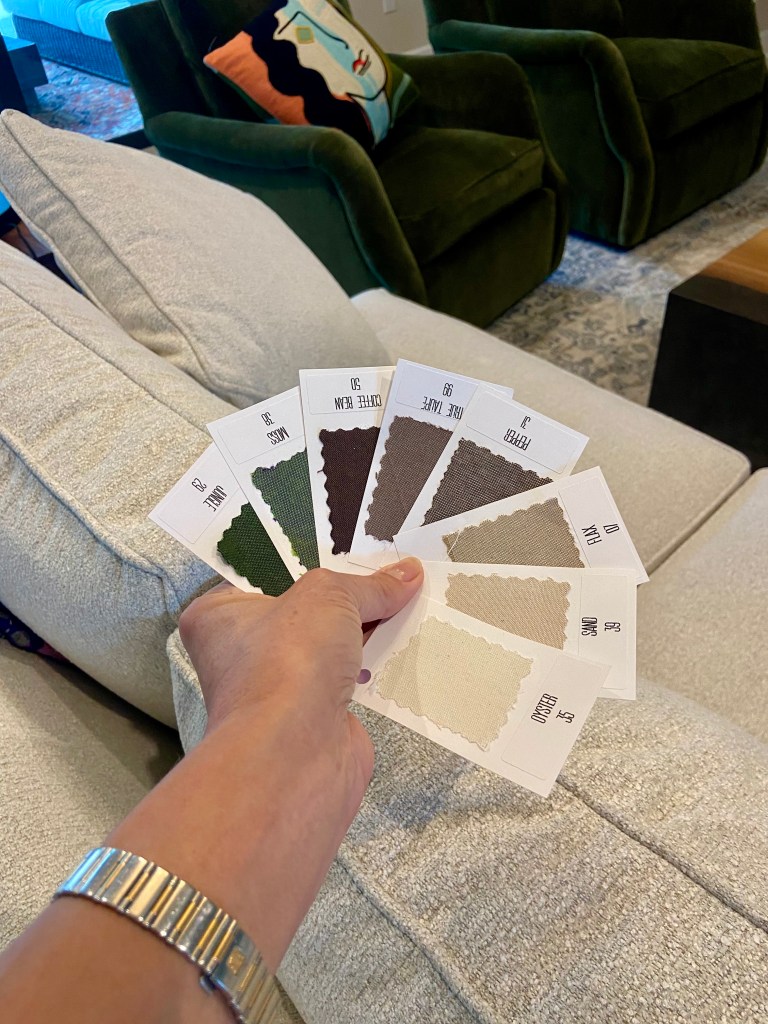
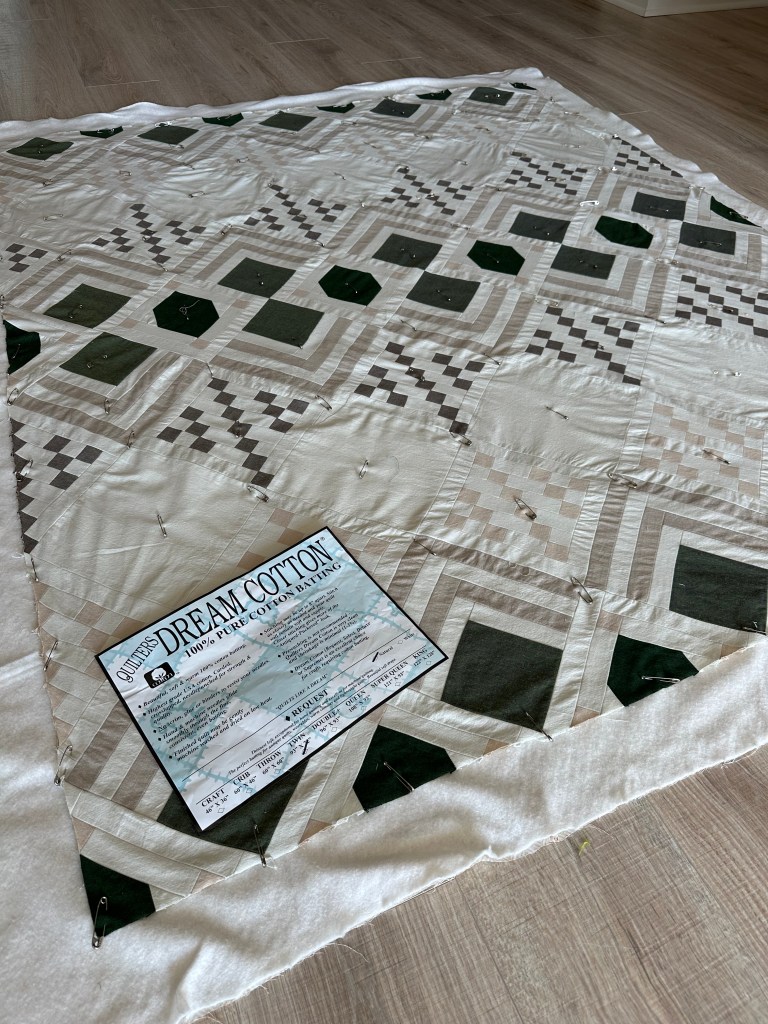
Hand and machine pieced Hand and machine quilted by myself 61″ after the dense quilting. Prior to quilting the top measured 63″x63″. Quilter’s Dream Request Batting Self Stretched and Mounted on 1 1/2″ gallery frame using this method Devonstone Cotton Linen in Champagne and Kona Cotton
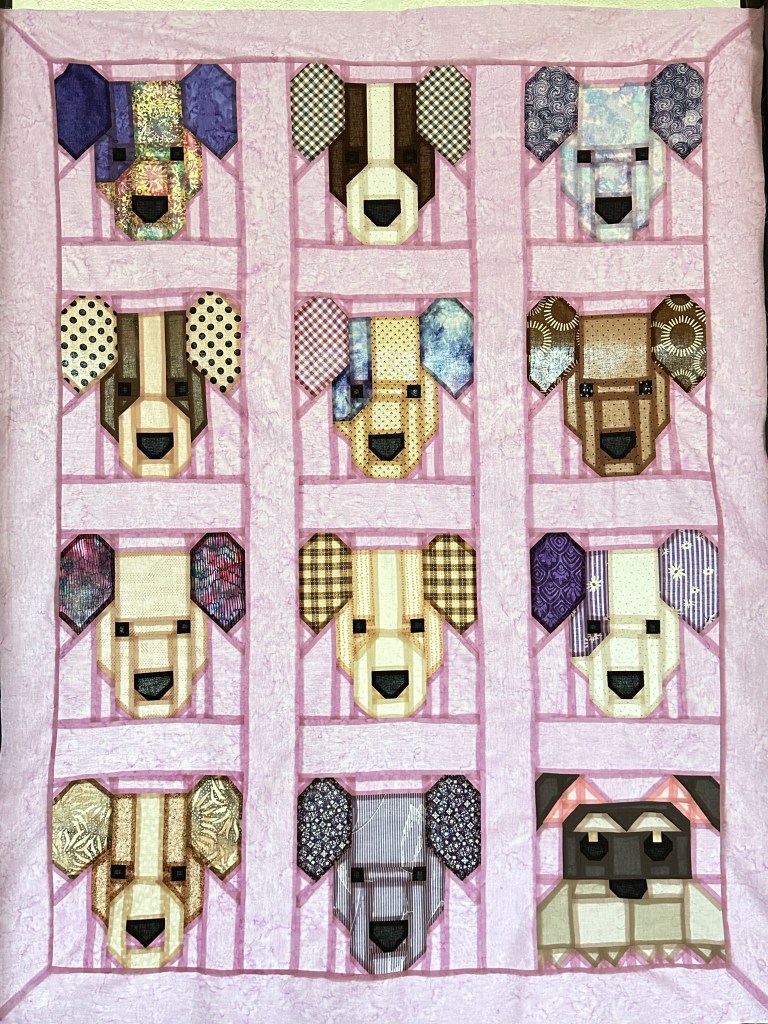
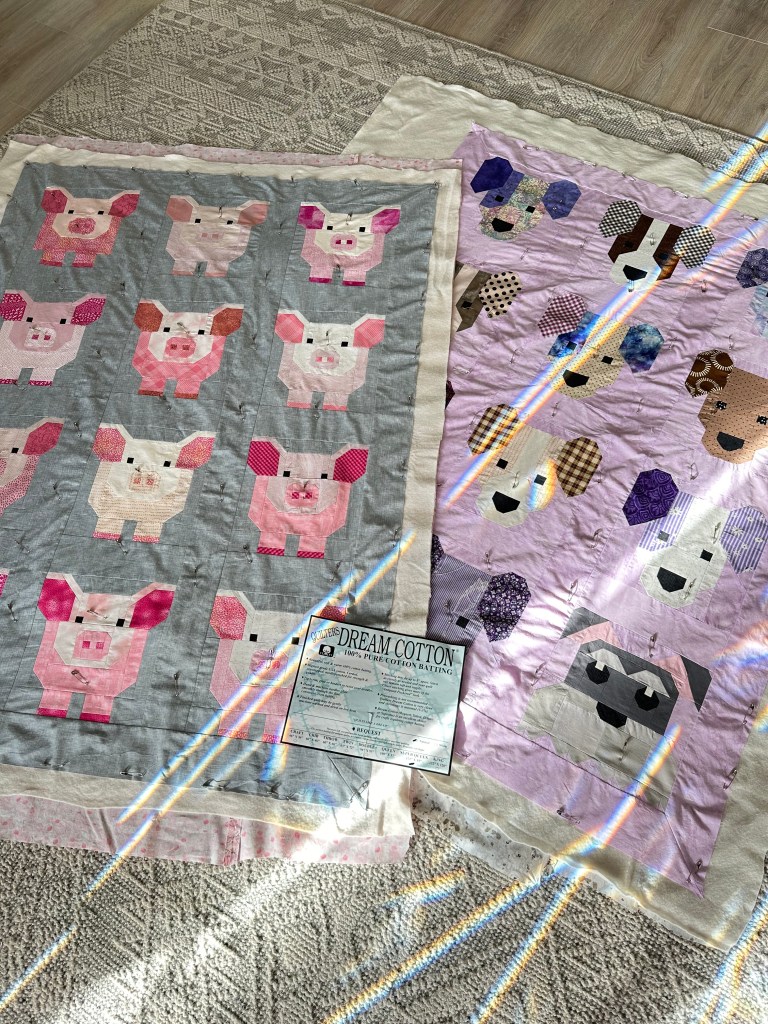
One of the bittersweet milestones of grandparenting is realizing that little ones eventually outgrow the baby quilts that once seemed so enormous. When our youngest granddaughters reached that stage, I knew it was time to create something new—quilts they could grow into and love for years to come. Rather than choosing a traditional pattern or color palette, I took my inspiration from what mattered most to them at the time: their favorite colors and the stuffed animals they carried everywhere. Those beloved companions became the heart of two very special quilts that we affectionately named Pig and Puppy.
🎥 Watch the Process
Click Play below to follow the making of the Pig and Puppy quilts—from the first fabric choices to the final hand quilting and then the gifting!
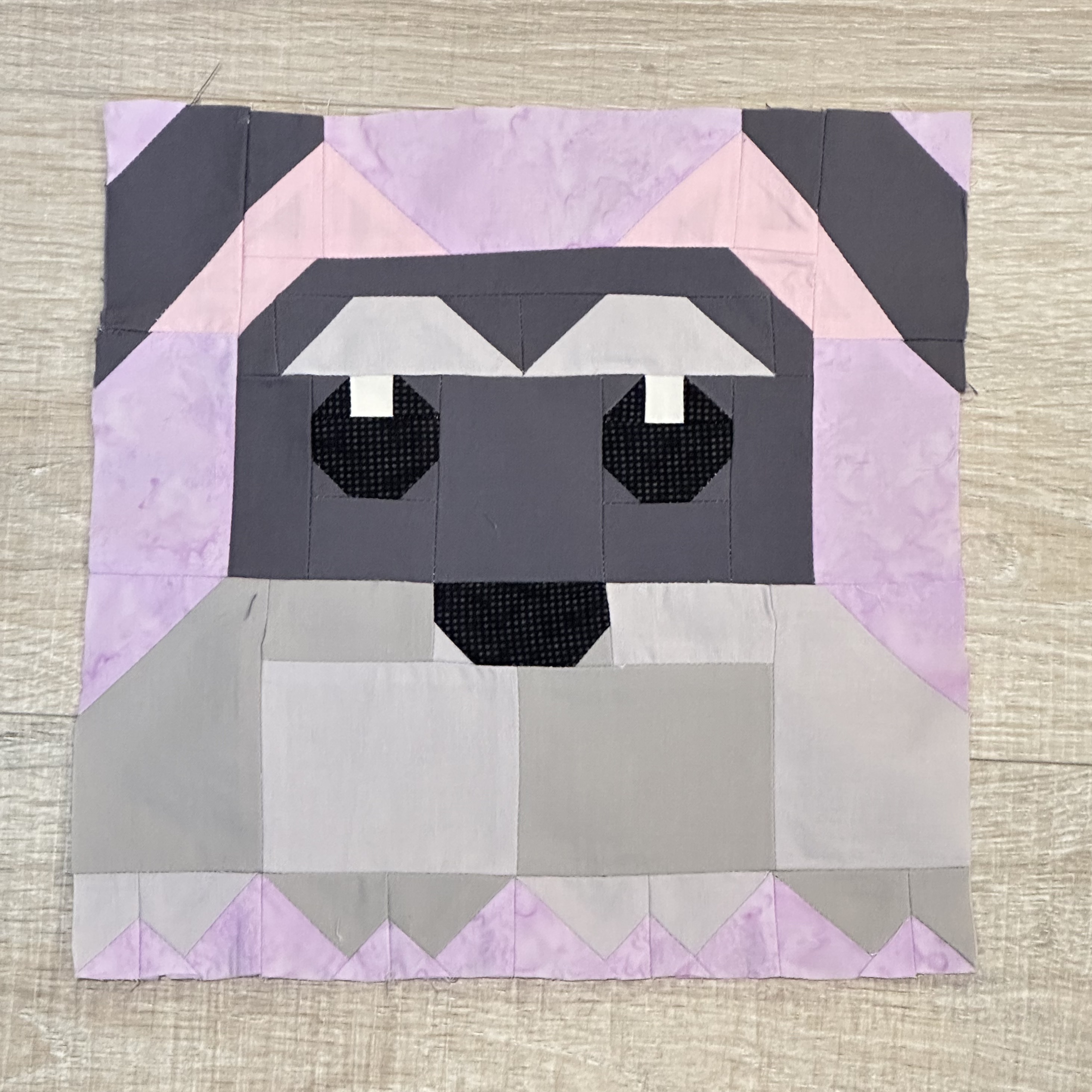
Instead of starting with a pattern, I started with them. Their favorite colors and their most treasured stuffed animals became the inspiration for two quilts that would soon be known simply as Pig and Puppy. The Puppy quilt became even more personal because it needed one very special addition. Their beloved schnauzer, Walter, simply had to be included, so I designed a custom quilt block just for him. Seeing their favorite companions—both stuffed and furry—stitched into their quilts made these projects even more meaningful.
One of my favorite moments comes before the batting and backing are ever added. I love seeing the quilt tops—still just “flimsies”—hanging in the window with the sunlight streaming through them. The light reveals every tiny piece that came together to create the design, reminding me just how many individual shapes and stitches make up the whole. Before they become cozy quilts, they are works of patchwork art, and I never tire of admiring them in that fleeting stage.
Every quilter has those tried-and-true supplies they reach for again and again, and for me, Dream Cotton Request batting is one of them. I use it in many of my quilts, but I especially love it for hand quilting. Its low loft lets the piecing shine, gives the finished quilt a soft, graceful drape, and makes every hand stitch a pleasure. It’s one of those products I trust completely and return to with every hand-quilted project.
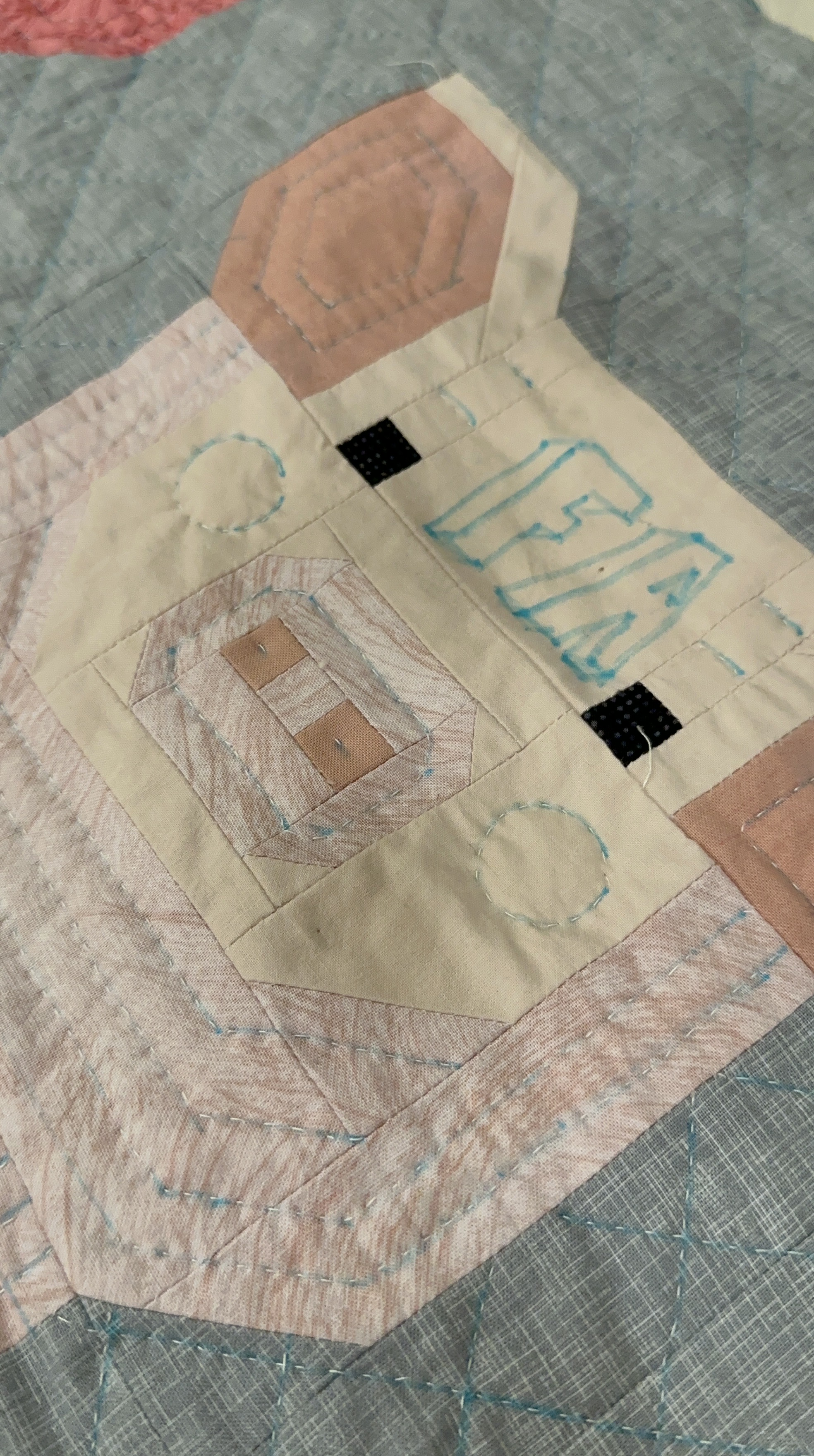
Every quilt has a bit of Peter in it, one way or another, and these were no exception. Before I began the hand quilting, he helped by sketching the quilting designs directly onto the tops. His artistic eye brought another layer of personality to each quilt, creating gentle lines for my needle to follow. I may have stitched every quilt by hand, but these two quilts were truly a team effort from start to finish.
One of the questions I’m asked most often is, “How long does it take you to hand quilt one of your quilts?” I finally decided to find out. I timed the hand quilting on both the Pig and Puppy quilts, and each one required about 35 hours of stitching by hand. Those quiet hours with needle and thread are some of my favorite parts of the quilting journey. Every stitch slows me down just enough to enjoy the process and think about the little girl who will someday wrap up in the finished quilt.
Choosing the backing and binding is one of my favorite finishing touches. I wanted each quilt to feel just as special on the back as it did on the front, so I selected playful all-over prints featuring pigs and puppies that perfectly complemented each quilt’s theme. The coordinating bindings tie everything together, framing each quilt and giving it a polished finish. Even the backs tell part of the story.
And finally, the finished quilts. Countless tiny pieces, hours of hand stitching, a custom Walter block, Peter’s artistic quilting designs, and so much love all came together in these two quilts. Every time I see them, I’m reminded that the very best quilts aren’t just made with fabric—they’re stitched together with the people, memories, and stories they represent. I hope these quilts will bring comfort, smiles, and happy memories to our granddaughters for many years to come.
I’d love to hear from you! If you were making a quilt inspired by someone you love, what special details would you include to make it uniquely theirs? Share your ideas in the comments below!
Pig and Puppy Quilts Sewfrench originals
For our twin granddaughters whose favorite stuffies are a pig and puppy
Our oldest granddaughter and her husband are expecting their second child, and the nursery theme is an old-fashioned blue-and-white gingham with teddy bears and warm wood tones.
When I think of classic baby quilts, the Double Irish Chain is always one of the first that comes to mind. It has such a timeless, heirloom feel—exactly the look I wanted for Hudson’s nursery.
What could be more traditional than a Double Irish Chain quilt? It’s one of those timeless quilts that looks far more complicated than it is. With simple strip piecing, no pattern is really needed.
I struggled to find solid blue and white fabrics, along with a matching gingham, that were a true baby-boy blue. Most of this season’s fabrics leaned toward aqua or turquoise. I persevered and finally found exactly what I was looking for.
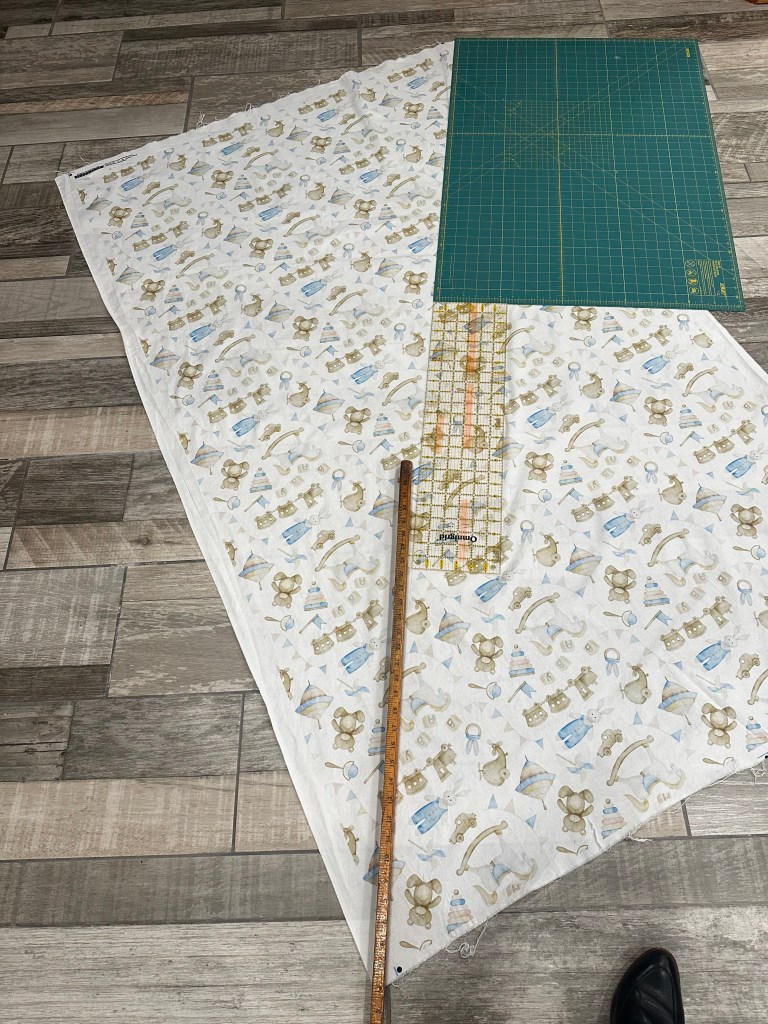
After searching everywhere, I ended up having the backing printed through Spoonflower, and it was exactly what I had envisioned: Welcome Sweet Baby Nursery Toys on White in Petal Signature Cotton.
Finished squares: 1″
White border: 1½”
Blue borders: 2″
Finished size: 37″ × 37″
Ready to miter the corners!
The satisfaction of a perfect miter is hard to beat!
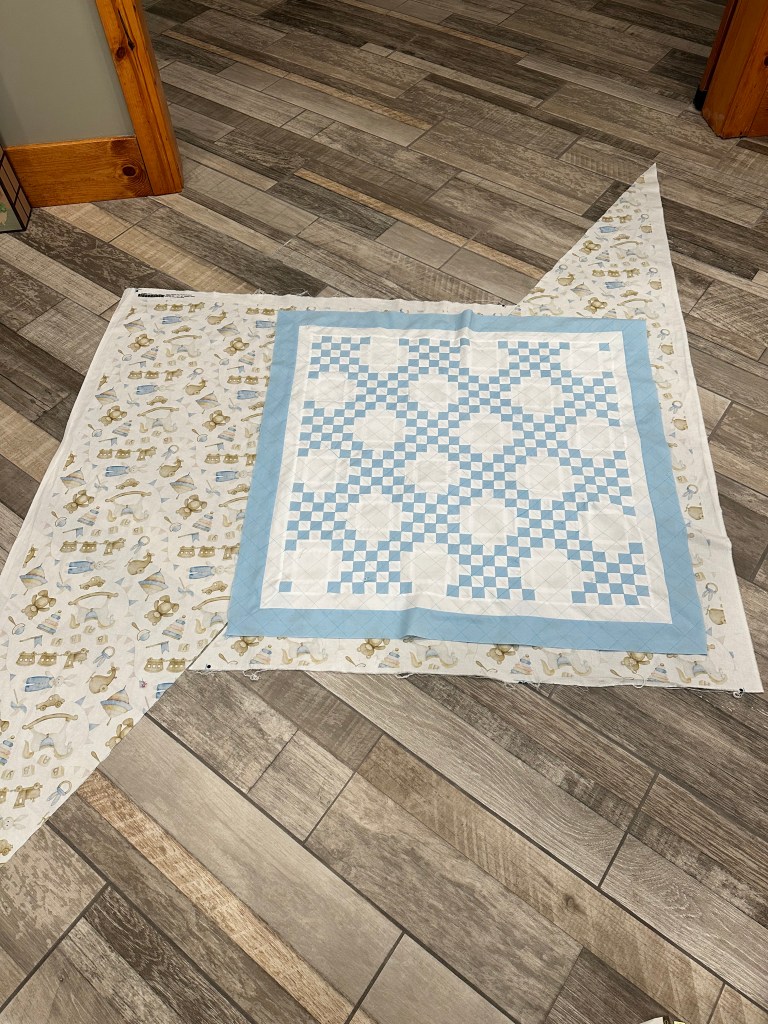
A little backing trick…
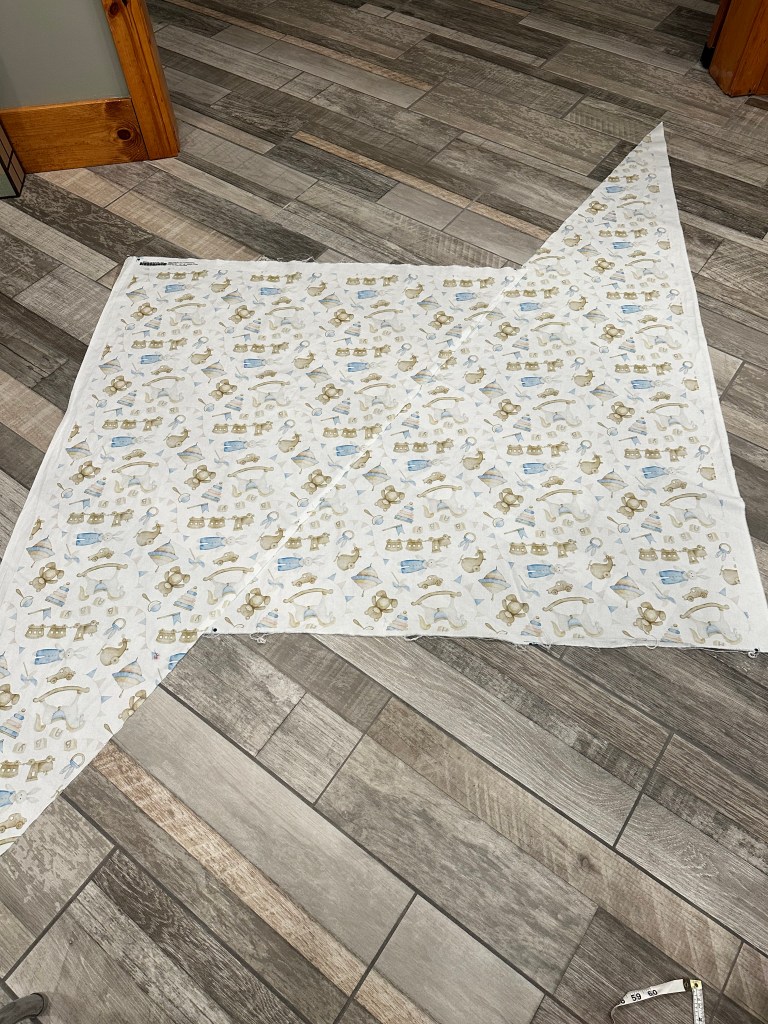
If your backing isn’t quite wide enough, but you have extra length, try this trick. Cut the fabric diagonally from corner to corner, shift the two pieces until you gain the width you need (remembering to allow for quilting overage and seam allowances), then stitch the diagonal seam back together.
Because the seam is now on the bias, handle it carefully while sewing. This works especially well with solids or prints that don’t require pattern matching.
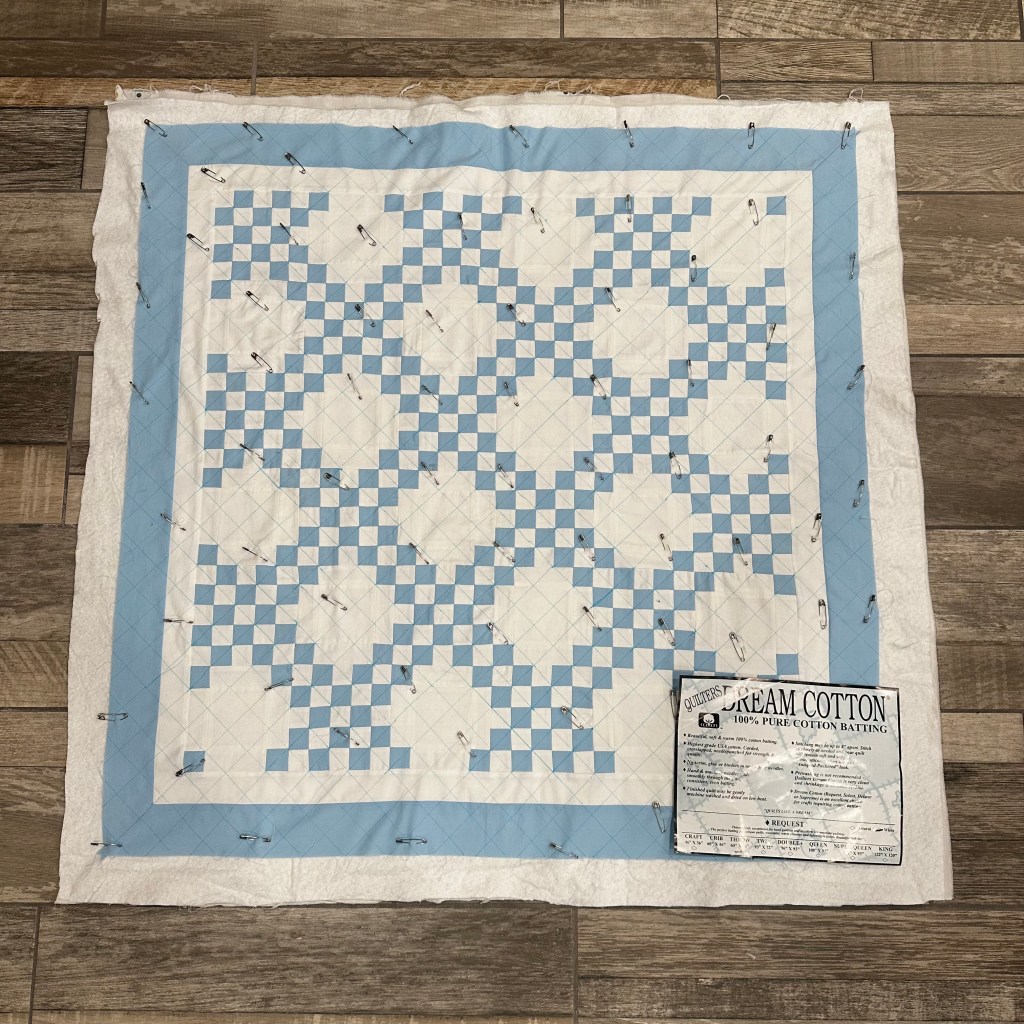
Batting
I always photograph my quilts with the batting I used. Quilters Dream Request Cotton Batting is still my favorite. It’s wonderful for hand quilting, performs beautifully with machine quilting, and gives quilts a lovely soft hand.
Bias Binding
As usual, I cut the gingham binding on the bias for the look I wanted. My grandmother always insisted that bias-bound quilts aged better.
Who am I to argue with my grandmother?
The Finishing Touch
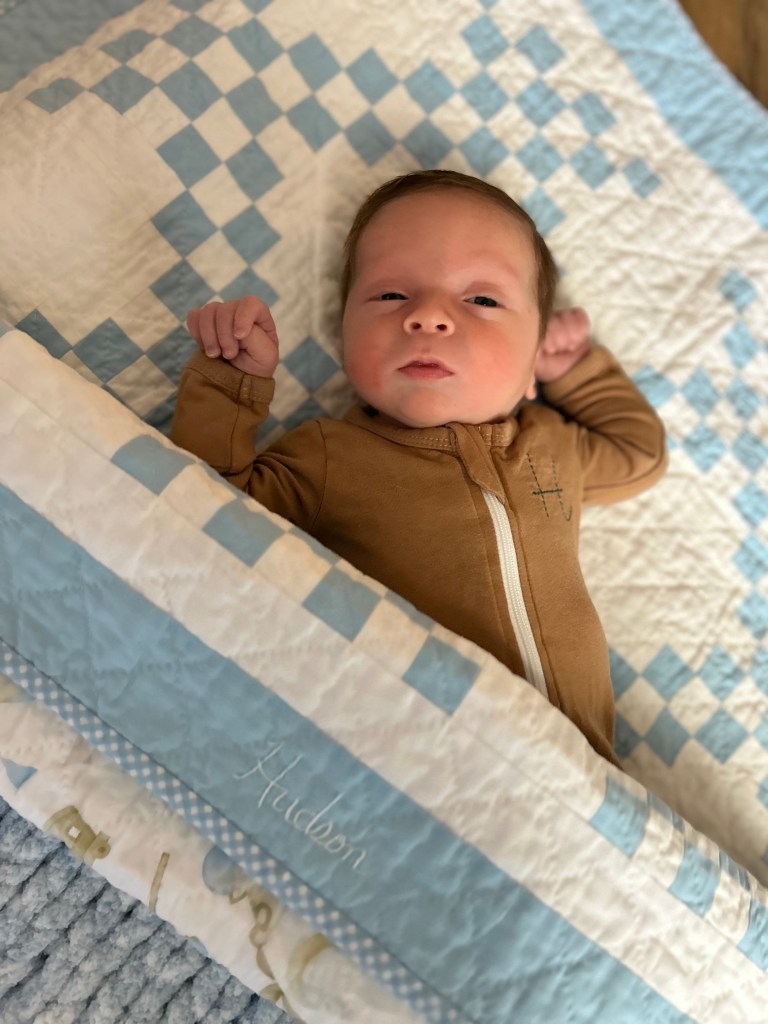
After embroidering Hudson’s name, birth date, and my initials, it was ready to be shipped to our newest great-grandson.
Ready to ship!
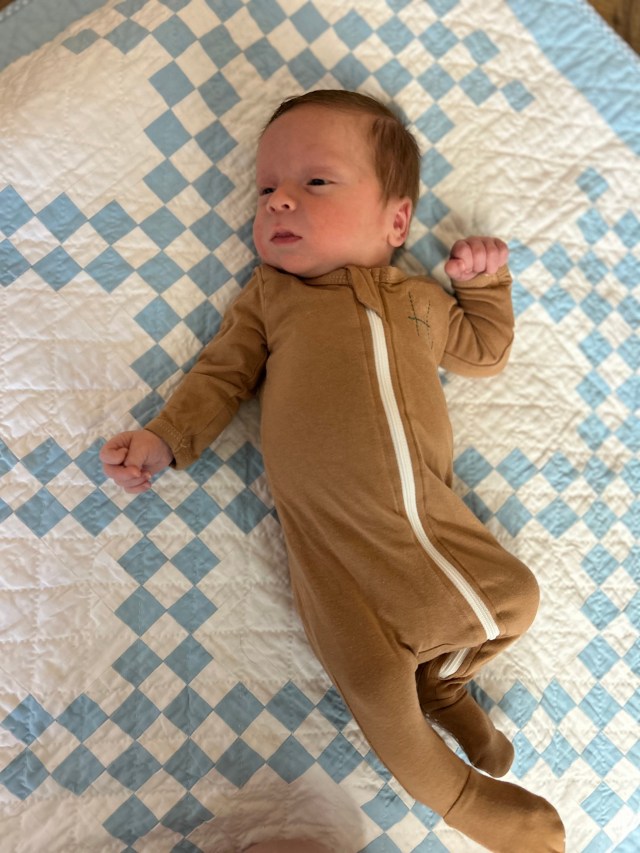
Great-grandson #2 has arrived!
Isn’t he the sweetest?
Feel free to ask questions if you need more explicit directions for this pattern.
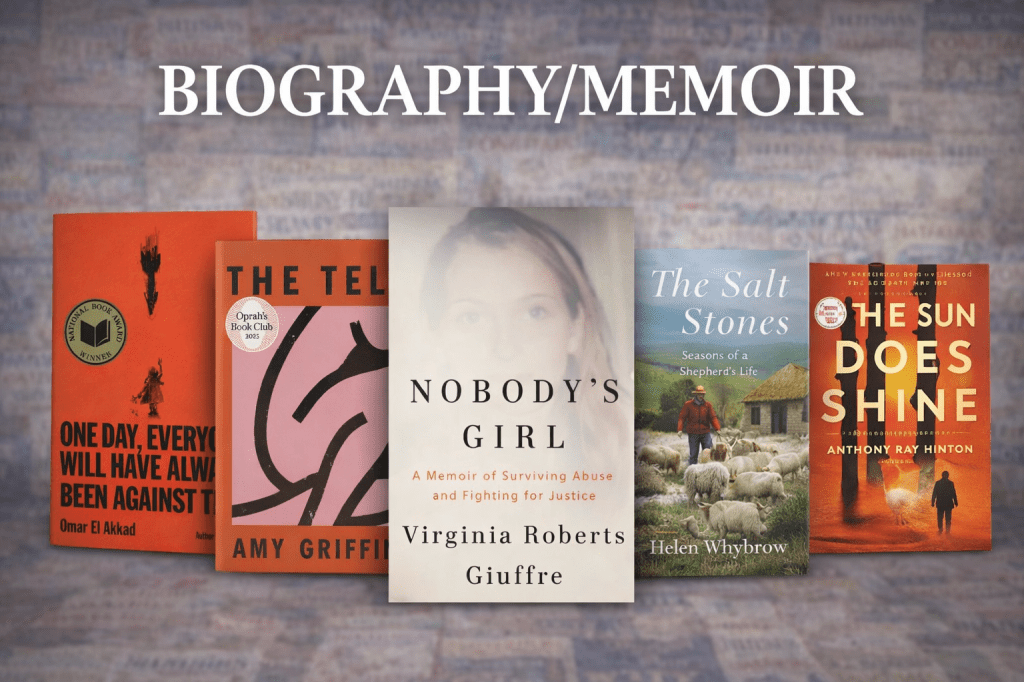
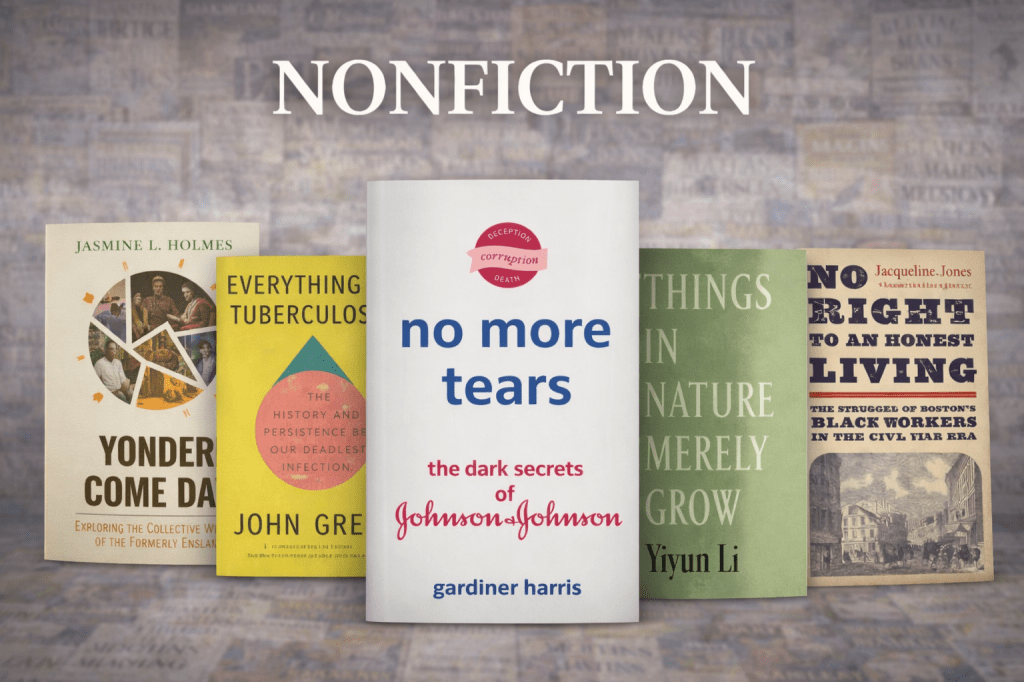
Twenty books. Four genres. A reading year shaped by voice, clarity, and emotional truth.
Disclosure: This post contains Amazon affiliate links. If you buy through them, I may earn a small commission at no extra cost to you.
I read widely in 2025, but these were the books that stayed with me — for their voice, emotional depth, and the way they quietly reshaped how I see the world. Many of these titles also appeared on major Best Books of 2025 lists, which only confirmed what I felt as a reader.
No More Tears — Gardiner Harris True horror. Very difficult to read and also to not put down.
Everything Is Tuberculosis — John Green An eye-opening look at how tuberculosis exposes the human cost of global inequality.
Things in Nature Merely Grow — Yiyun Li A heartbreaking, deeply human testament to living with parental pain that never leaves.
Yonder Come Day — Jasmine L. Holmes A devastating and necessary portrait of slavery told through the people who actually lived it.
No Right to an Honest Living — Jacqueline A. Jones An illuminating study of pre–Civil War Boston, where freed slaves forged community and leadership amid shifting social and economic pressures
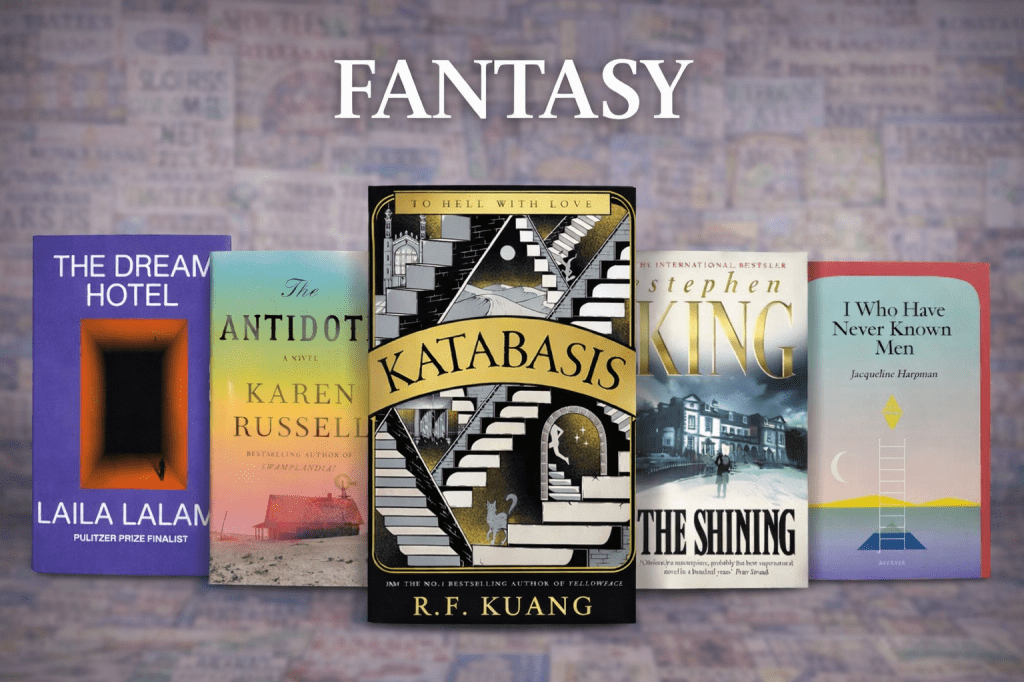
Fantasy
Katabasis — R.F. Kuang Holy hell—Kuang didn’t just write a book about descending into the underworld; she built a new one, and I honestly think future authors will be measuring their hells against hers.
The Antidote — Karen Russell At its heart, this hopeful novel is about memory—lost, uncovered, and newly made. It is a deeply moving and transformative read.
The Shining — Stephen King A masterfully eerie, psychological horror that turns a lonely mountain hotel into a chilling exploration of fear and unraveling sanity
The Dream Hotel — Laila Lalami A sharp, unsettling tale of surveillance that reaches into the unconscious. Once you read it everything is The Dream Hotel.
I Who Have Never Known Men — Jacqueline Harpman A deeply affecting story that questions identity, isolation, and what makes us human.. It’s a slim book, but its impact lingers long after the last page.
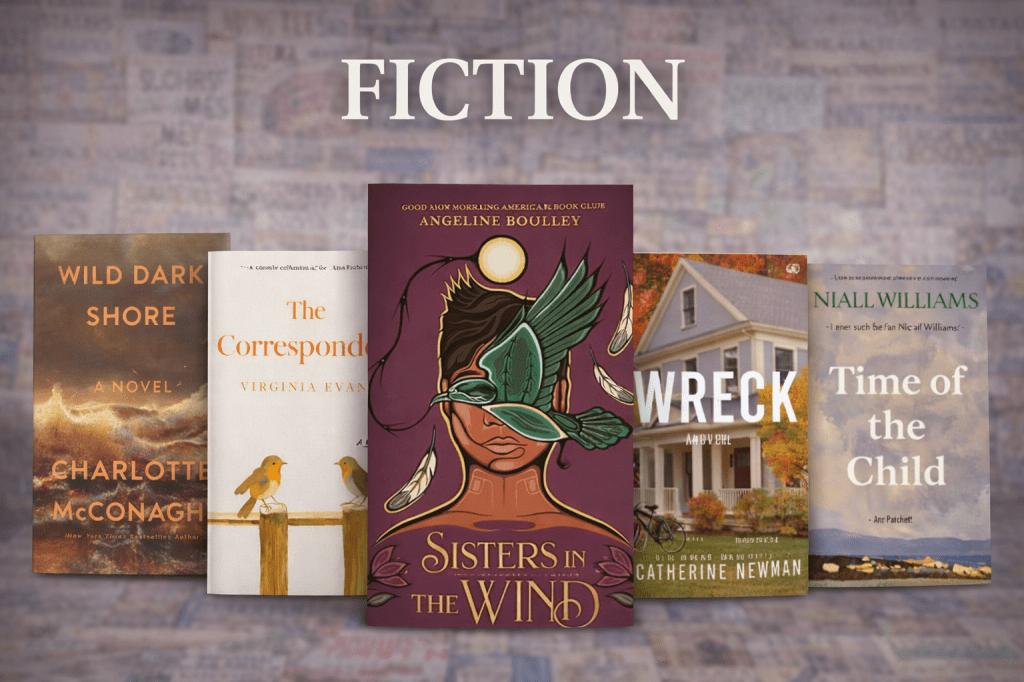
Fiction
Sisters in the Wind — Angeline Boulley A haunting, page-turning story that deepens your understanding of identity, resilience, and the real stakes of ICWA for Indigenous youth.
The Correspondent — Virginia Evans The kind of book that makes you want to send letters just for the excuse to buy fancy paper.
Wreck — Catherine Newman Every page rings with emotional truth, tracing motherhood, family bonds, and grief with rare clarity.
Wild Dark Shore — Charlotte McConaghy A haunting, beautifully written page-turner about love and survival against a brutal natural world.
Time of the Child — Niall Williams A lyrical, deeply moving portrait of love and quiet miracles in a small town told as only an Irish writer can!
These top twenty books didn’t just fill a reading year — they shaped it.
I read 112 books this year, and I keep a running list on Goodreads if you’d like to follow along.
If you’ve read any of these, I’d love to know which ones stayed with you, too.
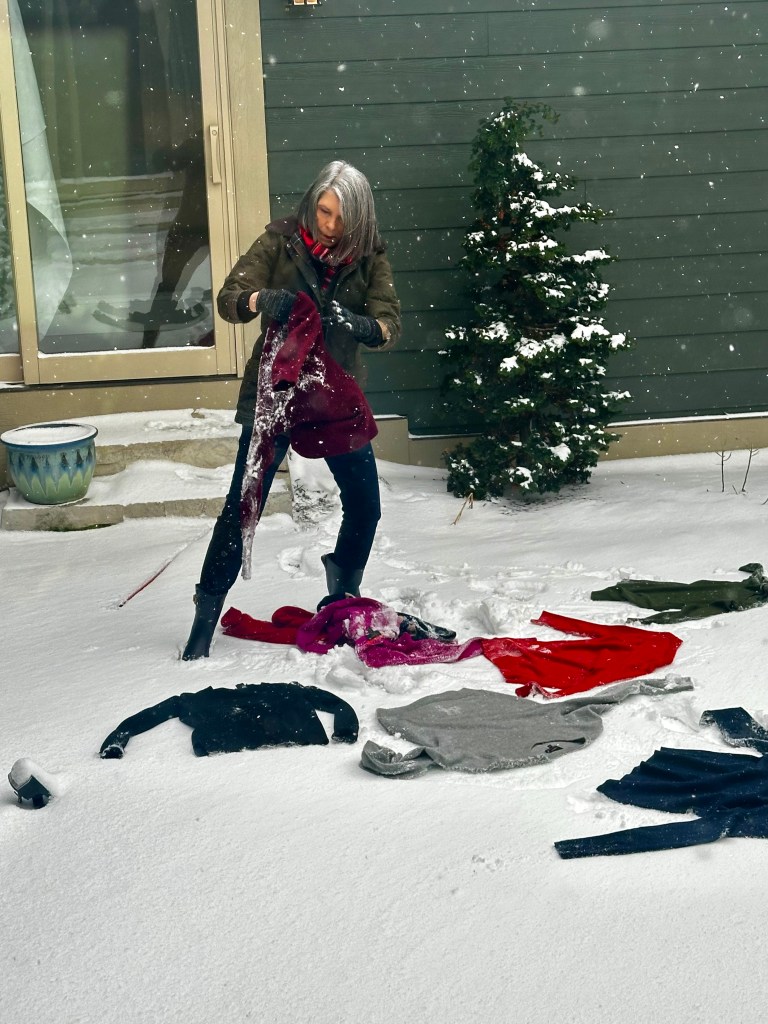
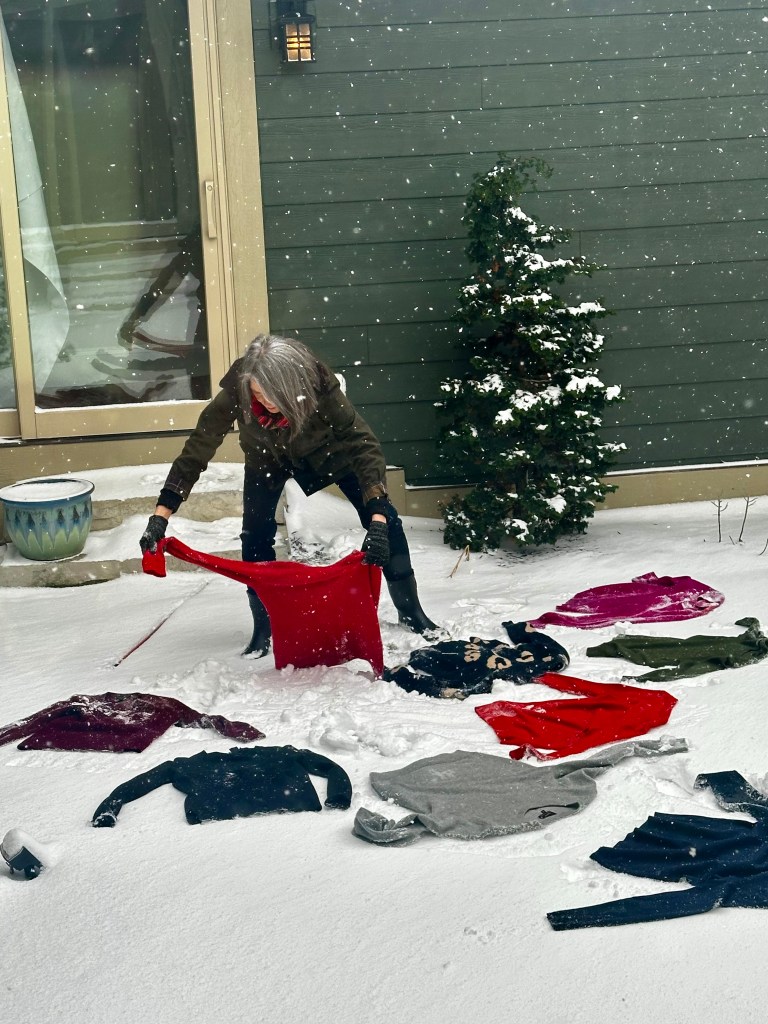
Wool has been loved for centuries—and not just because it’s cozy and warm. One of its coolest features is that it practically cleans itself! In fact, one of the oldest (and most natural) ways to freshen up wool doesn’t involve water, soap, or a washing machine at all. All you need is… snow ❄️
Yes, really. A good snowfall can work wonders on wool blankets, sweaters, and other woolly favorites. It’s a simple, eco-friendly trick that fits perfectly with the sustainable nature of wool itself.
So how does this work?
Wool fibers are pretty amazing. They’re naturally coated in lanolin, a waxy substance that helps repel dirt, bacteria, and odors. Because of this, wool doesn’t need to be washed nearly as often as synthetic fabrics. When you lay wool out in fresh snow, the cold and light moisture help loosen trapped dirt and odors—leaving your wool feeling fresh, clean, and revived without any harsh treatment.
Nature really does know best.
If you’re curious to try this old-fashioned snow-cleaning trick, it’s surprisingly simple. Here’s how to do it:
First, wait for a fresh snowfall. You’ll want clean, powdery snow—nothing slushy or dirty. Fresh snow is the real star of this method.
Next, lay your wool item right on top of the snow. Blankets, sweaters, rugs—whatever needs a refresh. Spread it out evenly, and if you’d like, gently press or lightly cover it with snow so the fibers make good contact.
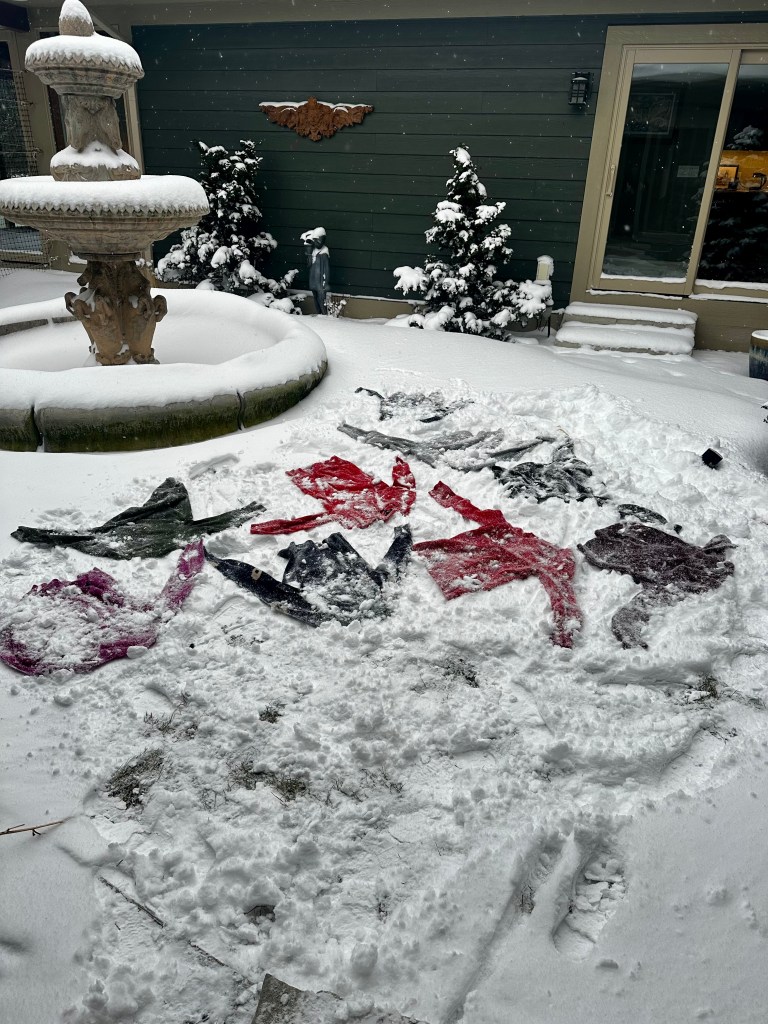
Give it a soft pat and let it rest for about 10 to 15 minutes. Then flip it over and repeat on the other side. During this time, the cold and moisture help loosen dirt and neutralize odors naturally.
Ideally, temperatures should be quite cold. It was about 15°F when I cleaned these. Super-light, dry, powdery snow won’t make your wool wet. Once temperatures rise above 25–30°F, warm wool placed on cold snow can start to become damp. In this case, the colder, the better.
When you’re finished, shake the wool well to remove any lingering snow. A quick hand-brush works too if needed.
Finally, bring it inside and hang it up to dry completely. That’s it—no soap, no machine, no fuss.
Why Snow-Cleaning Works So Well
One of the best parts of this method is how gentle and earth-friendly it is. There’s no water, no detergent, and no energy use—just nature doing what it does best. It helps preserve wool’s natural lanolin, keeps the fibers happy, and freshens odors without stripping or stressing the fabric.
There’s also something deeply satisfying about it. Cleaning wool with snow connects us to a tradition that’s been passed down for generations in colder climates. It’s simple, beautiful, and rooted in a slower, more thoughtful way of caring for the things we love.
So the next time fresh snow falls, skip the laundry room and head outside instead. Lay down your wool, let the snow work its quiet magic, and enjoy this timeless, nature-powered refresh.
Though we aren’t too crazy about the amount of snow we have received, this season, before we head to Florida, I am enjoying refreshing my closet with such a nice, clean scent.
Next big snow, I’ll be “washing” another round of sweaters, some wool coats and a Pendleton wool blanket.
Let me know if this is something your family has always done or if you are planning on trying it.